


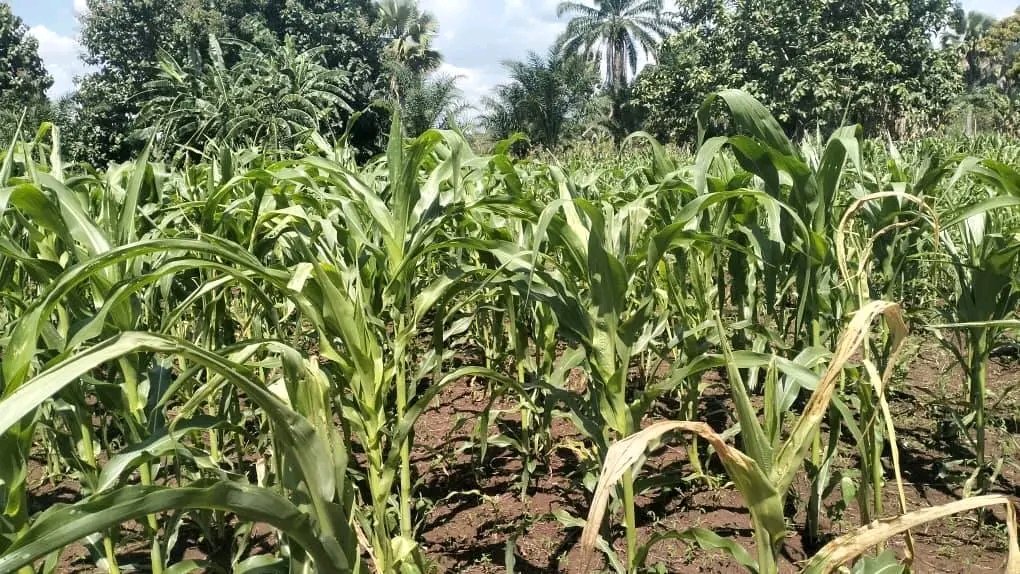
A prolonged dry spell in parts of Maridi County is threatening food production and pushing up maize prices, raising concerns over worsening food insecurity in one of Western Equatoria State’s major agricultural areas.
Farmers in northern and eastern parts of the county say inadequate rainfall throughout August has damaged crops and raised fears that the second-season harvest could fall sharply, potentially leaving households increasingly dependent on markets and food supplies from outside the county.
The situation has already begun to affect local food prices, and maize, one of the main staple foods consumed in Maridi, is currently selling for between 35,000 and 40,000 South Sudanese Pounds per basin, according to traders and residents.
Farmers and community members say the rising price is becoming increasingly worrying as agricultural production comes under pressure from the prolonged lack of rain.
The affected areas include Mabirindi, Kwanga and Mudubai bomas, where farmers report that crops are struggling to develop because of insufficient moisture.
With crops struggling as rains disappear, farmers say they have received rainfall only twice during August, leaving fields exposed to extended periods of dry weather.
The dry conditions are affecting several important food crops, including maize, sorghum, millet, cassava, sweet potatoes and groundnuts.
For farmers who depend almost entirely on agriculture for food and income, the failure of crops could have consequences beyond the current planting season.
Some farmers are already reporting losses, while others remain uncertain about whether their crops will survive long enough to produce a meaningful harvest.
The situation is particularly concerning because many rural households rely on their own agricultural production to feed their families and generate income for basic needs such as school fees, healthcare and other household expenses.
A poor harvest could therefore simultaneously reduce food availability and household purchasing power.
The concerns are being compounded by reports that traders from neighbouring counties and states are travelling to Maridi to purchase maize in bulk.
While increased demand provides an opportunity for farmers who still have stocks to sell, residents fear that continued bulk purchases could reduce locally available food supplies at a time when the next harvest is uncertain.
The combination of reduced production, increased demand and limited local stocks could place further upward pressure on food prices if the dry spell persists.
Residents fear that poorer households could be hit hardest, particularly those unable to afford increasingly expensive staple foods.
Farmers warn that the current situation could become more serious in the coming months if rainfall does not improve.
With agriculture serving as a major source of food and livelihoods in Maridi County, widespread crop failure could force communities to rely more heavily on markets and food transported from other areas.
Such dependence could expose households to further price increases, particularly when transportation costs and other expenses are added to the price of food brought into the county.
The situation also highlights the vulnerability of communities whose livelihoods depend heavily on seasonal rainfall.
Farmers are calling on agricultural authorities and humanitarian organisations to urgently assess the extent of crop damage and determine what support may be required.
They say early intervention could help affected communities prepare for possible food shortages and protect vulnerable households from the economic impact of a failed harvest.
Possible responses could include agricultural assessments, support for affected farmers and measures to strengthen food availability if local production declines.
However, farmers say timely action is essential because waiting until food shortages become severe could make intervention more difficult and costly.
The developments in Maridi come amid wider concerns over irregular rainfall and agricultural losses in different parts of South Sudan.
For communities that depend on rain-fed agriculture, unpredictable rainfall can disrupt planting and harvesting cycles, making it difficult for farmers to plan production.
In Maridi, where large numbers of households depend on farming, continued dry conditions could therefore affect not only food security but also local trade and household incomes.
The rising price of maize is already providing an early indication of the pressure that could develop if local supplies decline.
For now, farmers are watching the skies and hoping for sufficient rainfall to rescue crops still standing in their fields.
But with August already recording limited rainfall in affected areas, concern is growing that the county could face a difficult agricultural season.
If the dry spell continues and the harvest is significantly reduced, Maridi could see a combination of falling food production, rising staple prices and increased dependence on food from outside the county.
The situation has therefore moved beyond a farming concern and is increasingly becoming a food-security and household economic issue.
For farmers, the message is straightforward: without enough rain, there may not be enough food—and if local food supplies fall, consumers could be forced to pay considerably more for what remains.