


Western Equatoria State Governor Badagbu Daniel Rimbasa has raised concern over what he described as the continuous movement of cash from the state to Juba, warning that the practice is reducing liquidity in local markets and weakening economic activity.
Rimbasa urged traders and residents to keep money circulating within Western Equatoria wherever possible, while using formal money-transfer services when funds need to be sent to the national capital instead of physically transporting large amounts of cash by air.
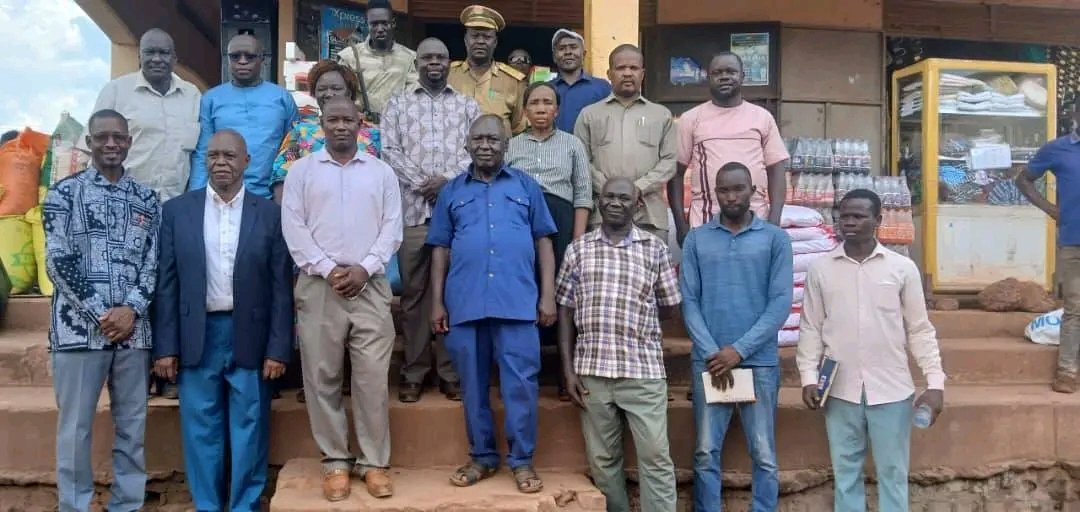
The governor made the remarks during a recent tour of markets in Yambio, where he inspected trading conditions, reviewed commodity prices and engaged directly with traders about challenges affecting their businesses.
“When this money enters the market and starts circulating, it eventually reaches the traders through the sale of their goods. But after selling their goods, the traders send the money back to Juba by plane. As a result, Western Equatoria is left with less money in circulation,” Rimbasa said.
The governor’s concern centres on the movement of money after commodities are sold in Yambio and other parts of the state.
Under the pattern he described, money enters Western Equatoria through the purchase and sale of goods, circulates among consumers and businesses, but is subsequently transferred physically to Juba by traders.
Rimbasa argued that retaining a greater proportion of that money within the state could help businesses buy more goods locally, support other traders and service providers and maintain economic activity in local markets.
He therefore encouraged people who need to remit money to Juba to use available money-transfer channels rather than carrying large amounts of physical cash on aircraft.
The governor’s comments come amid broader concerns among Yambio traders over the difficult business environment, including high taxes, rising commodity prices, weak purchasing power and transportation costs. Recent consultations between traders and state authorities have also brought concerns about market organization and the cost of bringing goods into Western Equatoria to the attention of the government.
The issue of cash circulation is emerging alongside longstanding concerns over the cost of moving goods between Juba and Western Equatoria.
In previous years, traders and civil society organizations in the state have complained about multiple checkpoints and unofficial collections along major roads, arguing that such costs are ultimately passed on to consumers through higher commodity prices.
A 2023 report, for example, documented complaints of numerous roadblocks along routes linking Yambio with Juba, with traders saying payments at checkpoints contributed to rising prices.
Those concerns remain relevant to the state’s current economic challenges. Traders recently told the governor that high taxes, poor roads, insecurity and exchange-rate pressures are making it increasingly difficult to operate businesses and keep prices affordable.
The combination of high operating costs and limited liquidity can place additional pressure on small businesses, which depend heavily on continuous cash flow to replenish stock and meet day-to-day expenses.
Rimbasa said keeping money within Western Equatoria should be viewed as part of a broader effort to strengthen the state’s private sector.
He called on traders and residents to contribute to the local economy by continuing to transact within the state and supporting businesses operating in Yambio and other communities.
The governor’s argument is that money circulating repeatedly among local traders, transporters, service providers and consumers can generate wider economic activity than money that quickly leaves the state.
The call also comes after the governor’s recent market engagements, during which traders raised concerns about taxation, commodity prices, access to markets and other barriers affecting their livelihoods.
Rather than restricting legitimate financial transfers, the governor encouraged the use of money-transfer services when traders need to send funds to Juba.
The approach would allow traders to meet their financial obligations outside the state without physically transporting large quantities of cash, while potentially leaving more working capital available to businesses in Western Equatoria.
For traders, however, the effectiveness of the proposal will depend partly on the availability, reliability and affordability of financial services capable of supporting regular commercial transactions.
The call therefore places renewed attention on the role of financial services in a state where businesses face significant logistical and economic constraints.
The governor’s remarks highlight a wider question facing Western Equatoria: how to ensure that money generated through local trade contributes more substantially to the state’s own economic development.
Western Equatoria has significant agricultural potential, and its communities depend heavily on trade in agricultural produce and imported consumer goods. The World Bank has previously identified Western Equatoria as having substantial agricultural production potential, including a reported cereal surplus in earlier assessments.
But moving agricultural produce and commercial goods remains costly, while traders continue to cite taxation, transport and road-related expenses as major challenges.
For the governor’s proposal to have a lasting impact, observers would likely expect stronger access to financial services, improved roads, predictable taxation and a safer trading environment alongside efforts to encourage local cash circulation.
Rimbasa’s appeal therefore goes beyond where traders keep their money. It places the question of local liquidity, business growth and economic retention at the centre of Western Equatoria’s development debate.
As traders continue to face rising costs and pressure on their businesses, the state government’s challenge will be to ensure that efforts to retain money locally are matched by policies that make it worthwhile for businesses and consumers to invest, trade and spend within Western Equatoria.
The governor’s message is ultimately that money generated in Western Equatoria should do more work for the people of Western Equatoria before leaving the state.