


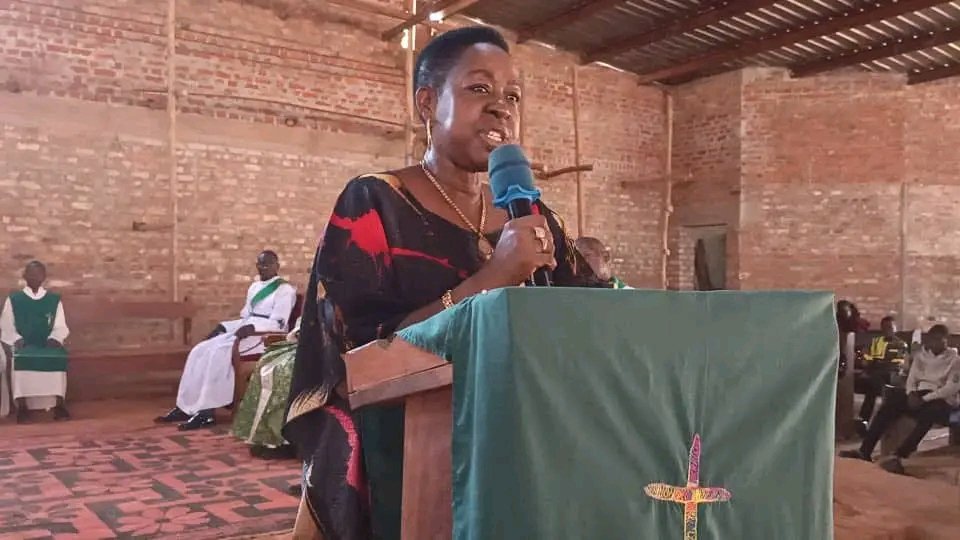
Former Speaker of the Transitional National Legislative Assembly, Dr. Jemma Nunu Kumba, has appealed to armed groups and individuals still in the bush in Western Equatoria State to lay down their weapons, return to their communities and join efforts to rebuild the state.
Kumba made the appeal while speaking at St. Mary Cathedral of the Catholic Diocese of Tombura-Yambio (CDTY), where she called on armed sons and daughters of Western Equatoria to take advantage of the amnesty granted by President Salva Kiir and return home peacefully.
She said the continuing insecurity should not be allowed to define relations between communities, arguing that the people of Tombura can live together if those still carrying guns choose peace.
“Anyone is welcome to put down the gun and come home to join brothers and sisters to develop our state.”
Kumba said many former combatants had already returned from the bush, integrated into government institutions and joined the national army, demonstrating, in her view, that returning to civilian life and participating in state-building is possible.
In a central part of her message, Kumba rejected the idea that the Azande and Balanda communities in Tombura should be regarded as permanent enemies.
“The Azande and Balanda have no problem among themselves. The real issue is those who are still in the bush.”
Her remarks seek to shift the focus of the peace debate away from communities as a whole and toward armed actors who continue to operate outside formal institutions.
The two communities have previously experienced serious violence in the area. Amnesty International reported that fighting in Western Equatoria in 2021 resulted in killings, destruction and the displacement of more than 80,000 people, with both Azande and Balanda civilians affected. The organization also noted that the communities had historically lived together and intermarried.
The history of the conflict has made reconciliation particularly important, as mistrust and political divisions can continue to affect communities even after active fighting declines.
Kumba said President Kiir’s amnesty provides an opportunity for those still in the bush to abandon armed confrontation and return to civilian life.
She pointed to people who have already returned and been integrated into government and the army as examples of how former combatants can transition from armed activity to participation in public institutions.
Her appeal comes at a time when questions of disarmament, reintegration and reconciliation remain central to efforts to achieve sustainable peace in South Sudan.
Rather than continuing armed confrontation, Kumba urged those still outside government and community structures to consider returning and contributing to development.
Kumba also called on churches, families and political and community leaders to work together to encourage reconciliation and persuade armed individuals to return home.
She said religious institutions have an important role to play because of their close relationship with communities and their ability to reach people affected by conflict.
Her appeal reflects the history of church-led peace initiatives in Western Equatoria. Religious leaders and churches have previously participated in mediation and community reconciliation efforts in the region, including initiatives involving Azande and Balanda communities.
Kumba said peace cannot be left solely to government institutions, arguing that families and communities must also help create conditions that encourage those in the bush to return.
As Peace linked to education and economic activity, the former Speaker said restoring peace is not only about ending armed confrontation but also about allowing ordinary people to rebuild their lives.
She urged leaders and communities to work together so that children can attend school without fear and residents can conduct businesses freely.
Her message places education and livelihoods at the centre of the peace debate, highlighting how insecurity can affect families long after violence has subsided.
“When there is love, everything goes well,” Kumba said.
The appeal comes as Western Equatoria continues to face the challenge of consolidating peace in areas that have experienced armed confrontation and community tensions.
From conflict to development, Kumba’s call for fighters to return is ultimately linked to a broader argument about development.
She said people who remain armed and outside formal structures are unable to fully participate in the development of their communities, while continued insecurity can discourage investment, disrupt education and restrict the movement of people and goods.
Returning home, she argued, would allow former combatants to become part of the communities they previously left and contribute to rebuilding the state.
The call also places responsibility on government and community leaders to ensure that those who return have meaningful opportunities for reintegration and peaceful participation in society.
For communities in Tombura and across Western Equatoria, the challenge is therefore not simply persuading armed individuals to surrender weapons, but creating an environment in which returning home can lead to sustainable reintegration, reconciliation and economic participation.
Kumba’s message is that the way forward should be through dialogue, forgiveness and community cooperation rather than continued armed confrontation.
As she put it, those who remain in the bush have an open invitation to return, lay down their guns and join their fellow citizens in building Western Equatoria.


