
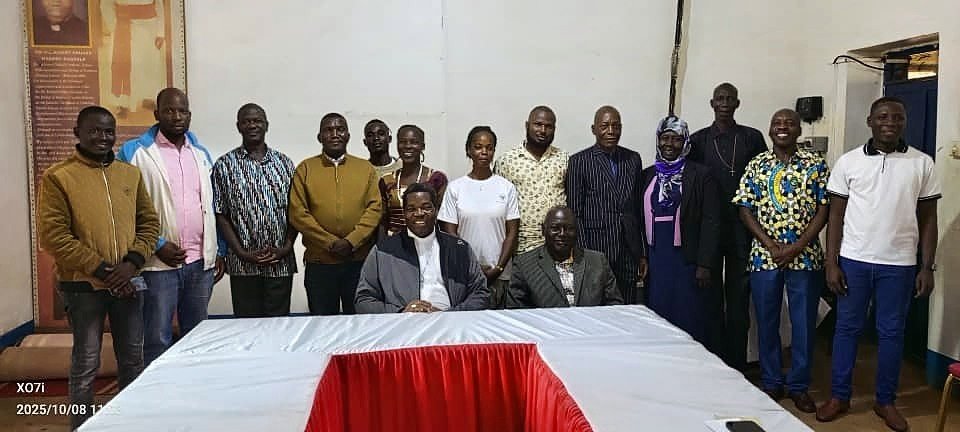
The Catholic Diocese of Tombura–Yambio has unveiled a bold economic transformation plan designed to position Western Equatoria as South Sudan’s leading agricultural powerhouse.
Through the newly launched “Pilot Marketing Development System and Value Chain Analysis” project, the Diocese seeks to bridge the gap between rural farmers and national markets, enhancing productivity, improving value chains, and ensuring that local communities reap fair returns for their produce.
The project implemented by the Community Development Program (CODEP) with technical and financial backing from CAFOD and Trócaire was formally launched during a high-level consultative meeting in Yambio on Tuesday, attended by government officials, farmers’ representatives, and development partners.
Delivering his keynote address, Bishop Edward Hiiboro Kussala described the initiative as a turning point for the region’s economy, saying it is time for South Sudanese communities to harness their natural wealth to fight poverty.
“Our land is rich and blessed, we must stop depending entirely on external aid. Our soil can become the bank of Western Equatoria it can give us food, income, and stability if we use it wisely,” Bishop Hiiboro said passionately.
The prelate called on all stakeholders’ church leaders, farmers, youth, and private investors to support the program and promote value addition through agro-processing.
“We should not only cultivate crops but also process our fruits and grains locally, that is how we create jobs, build industries, and keep money circulating within our communities,” he added.
Project facilitator, Mr. Justin Ebere Ginana, explained that the new marketing system goes beyond trading agricultural products it aims to establish a dynamic ecosystem that links producers, consumers, financial institutions, and service providers such as transporters and media.
“This is about creating a market system that benefits everyone,” Ginana noted. “Farmers will no longer work in isolation. They will be part of a connected value chain that increases efficiency and sustainability.”
Observers say the Diocese’s move reflects a growing recognition of the crucial role faith-based organizations play in driving development in fragile economies like South Sudan’s where access to stable markets and financing remains limited.
Rev. Fr. Charles Mbikoyo, Director of CODEP, praised the partnership with CAFOD and Trócaire as a model for empowering farmers to move from subsistence to commercial agriculture.
“This is the beginning of an agricultural awakening in Western Equatoria, we are setting a foundation that can make our farmers self-reliant and our communities economically secure,” Fr. Mbikoyo said.
Development experts believe that if successfully implemented, the project could serve as a blueprint for other states, transforming Western Equatoria into what Bishop Hiiboro called “the food bank of South Sudan.”
As the Diocese embarks on this ambitious journey, the message from Yambio is clear: faith, when joined with action, can cultivate not only crops but also hope, dignity, and prosperity for generations to come.