
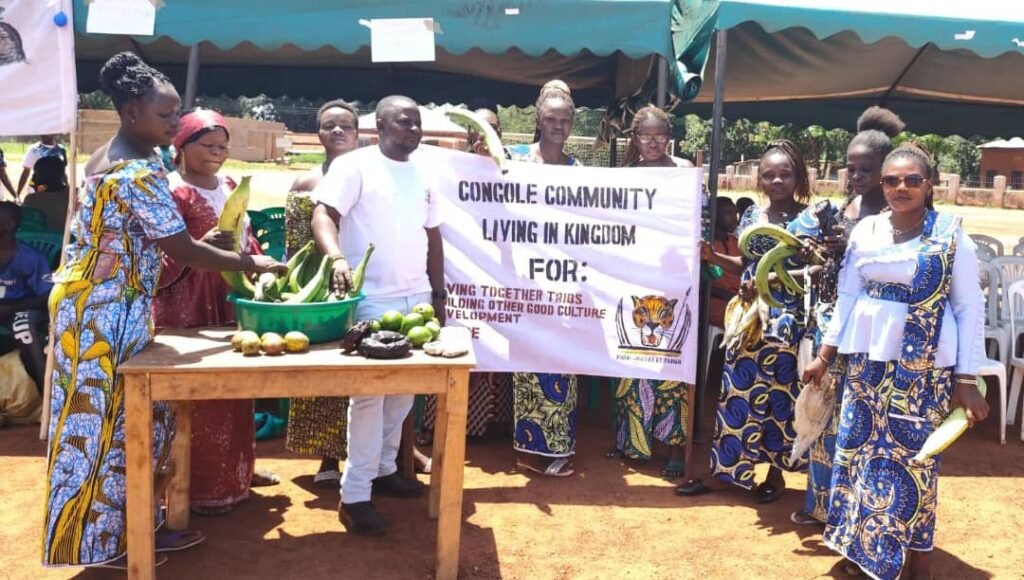
Members of the Congolese community living in Western Equatoria State have called on the state government to strengthen monitoring of all checkpoints leading into the state capital, citing repeated challenges in cross-border trade.
Speaking on Saturday during the closing ceremony of the first-ever Azande Kingdom Cultural Festival at Yambio Freedom Square, organized by the Kingdom with support from WPDI, Mr. Nuru Misa, Deputy Chairperson of the Congolese Community, highlighted the difficulties faced by traders entering South Sudan from Congo.
“Our country, Congo, shares a border with South Sudan, and there are nearly four exit points connecting the two countries through Western Equatoria,” he said.
“At these borders, we face many challenges. One of the main issues is that border personnel sometimes overcharge us when bringing goods into the state. We only need peace so that we can trade, contribute, and help improve the economic growth of both countries.”
Mr. Misa further detailed the harassment faced by Congolese traders while entering the state through, Gangura, Sakure, Bagugu and Ezo County.
“Security forces are harassing us with our goods. CID personnel are performing revenue collection duties, while MI personnel are doing the same work of the CID. At the border exits, we do not receive proper treatment. In town, foreign traders are taxed more heavily than South Sudanese citizens, which raises the price of commodities as we attempt to recover our costs. This creates an unnecessary burden on our communities.”
In response to the community’s concerns, Deputy Governor Joseph Justin Marona assured residents and traders that the new Western Equatoria State administration is committed to fair treatment for all residents, including foreign traders.
“Our administration is working day and night to ensure that everyone living in Western Equatoria is treated equally,” Deputy Governor Marona said.
“We are developing a strategic plan to review state taxes. If taxes are too high, we will coordinate with the national government to ensure fairness for all taxpayers. After all, we are all Africans and part of one country.”
Further reforms have been undertaken under the leadership of Governor Barrister James Al-Taib Jazz Berapai.
Shortly after assuming office, Governor Berapai reshuffled the State Revenue Authority, removing long-serving commissioner James Richard Ramadan and appointing a new head, describing the change as “a gift to the people of Western Equatoria and the business community.”
“Our administration will work hand in hand with all business stakeholders to ensure service delivery and promote a favorable environment for trade,” Governor Berapai said.
Additionally, the Western Equatoria Council of Ministers, in an extraordinary meeting two weeks ago, resolved to restore full authority and responsibility to the State Ministry of Commerce and Trade, a move aimed at strengthening oversight and supporting local and cross-border businesses.
The combined calls from the Congolese community and the reforms initiated by the state government highlight a renewed focus on transparent governance, equitable taxation, and border management.
Traders and residents alike see these measures as a crucial step toward improving economic cooperation, reducing unfair practices, and boosting regional trade between South Sudan and neighboring countries.
With these ongoing efforts, Western Equatoria State aims to create an environment of fairness and mutual trust, ensuring that communities, both local and foreign, can thrive while contributing to the state’s economic growth.