
The European Union has raised fresh concerns over South Sudan’s decision to proceed with elections before completing the country’s permanent constitution, warning that unresolved legal questions could cast doubt over the electoral process.
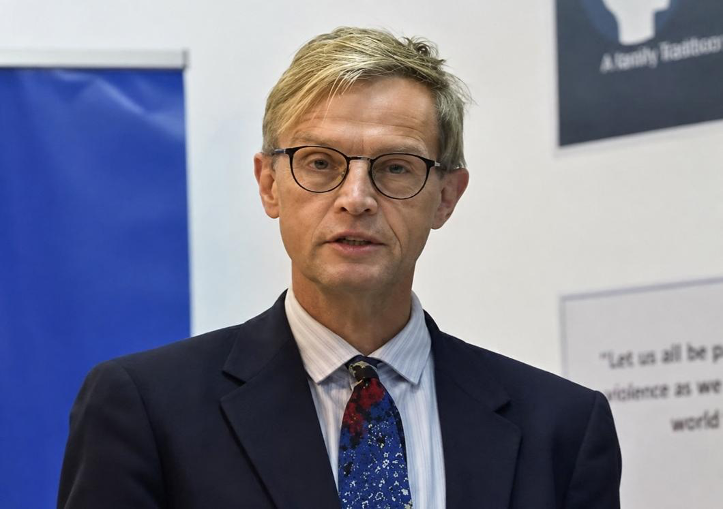
Speaking on Wednesday at the opening of consultations between the National Constitutional Review Commission and members of executive and independent institutions in Juba, Lothar Jaschke, EU Deputy Head of Delegation and Chargé d’Affaires, said holding elections under the transitional constitution was disappointing, particularly because the permanent constitution was envisioned as a key outcome of the 2018 peace agreement.
“It is disappointing that we are going into elections with the transitional constitution still in place, because the permanent constitution was one of the key outcomes envisaged under the 2018 peace agreement,” Jaschke said.
He also questioned the procedure used to amend the peace deal, saying required consultations with the Reconstituted Joint Monitoring and Evaluation Commission were not followed.
“There are also questions about the process through which the peace agreement was amended, particularly whether all the required consultations were undertaken,” he stated.
Jaschke warned that failure to address the procedural concerns could leave the country in a “legal limbo,” with uncertainty surrounding the status of the amendments and the elections.
He stressed that the EU expects the government to make further progress on the peace agreement and constitutional reforms before the transition comes to an end.
The government, however, said the absence of a permanent constitution will not stop the planned December elections.
Elia Lomuro, Cabinet Affairs Minister, emphasized that the constitution-making process will continue after the polls, with the elected government expected to complete the process.
“The permanent constitution is not abandoned. The process will continue, and the elected government will be responsible for completing it,” he noted.
Lomuro stated that the permanent constitution remains essential to defining South Sudan’s future system of governance, including its democratic institutions, rule of law, human rights and relationship between citizens and those in power.
The National Constitutional Review Commission (NCRC) said it has completed consultations across all 10 states and three administrative areas and is now engaging national institutions in Juba.
South Sudan gained independence in 2011 and has continued to operate under a transitional constitutional framework.
The 2018 Revitalized Peace Agreement committed the parties to a permanent constitution-making process as part of the broader transition toward democratic governance.
The transitional period has been extended several times amid delays in implementing key provisions of the peace agreement, including constitutional reforms and preparations for elections.
The government has now maintained that elections will be held in December 2026, while opposition groups and some international partners have raised concerns about whether the necessary political, legal and institutional conditions are in place.
The latest constitutional and legal debate follows Parliament’s approval of amendments to the peace agreement aimed at clearing obstacles to the December polls.
The European Union further noted that the process used to make those changes must also comply with the requirements of the peace agreement.