
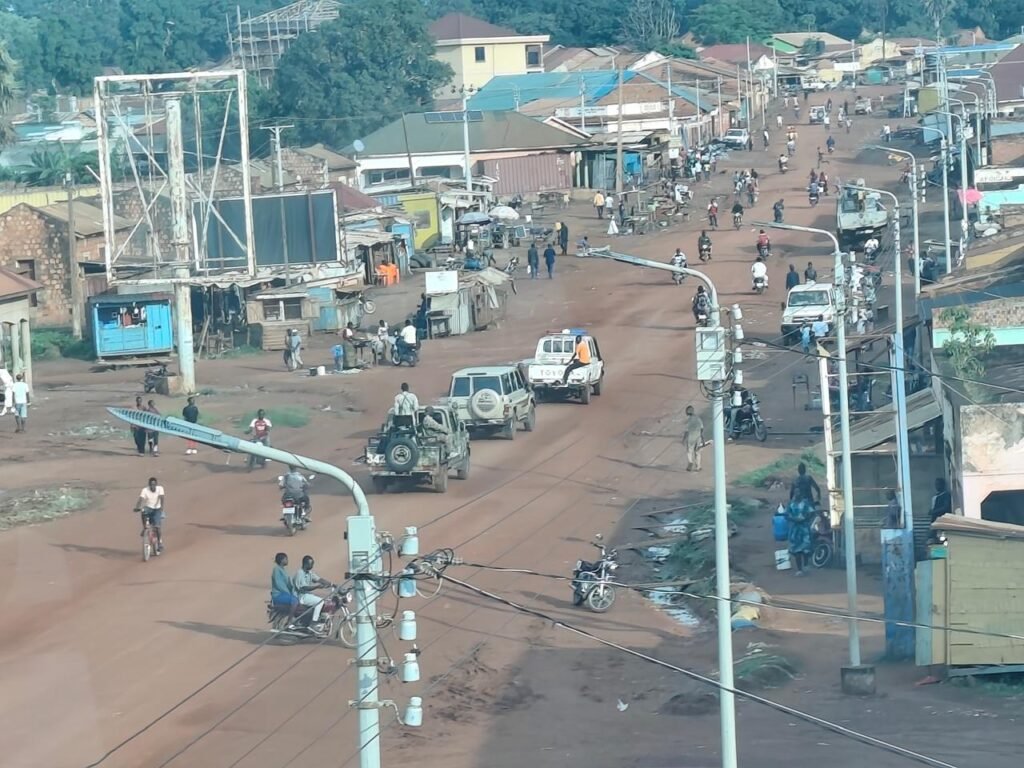
A worsening humanitarian crisis is unfolding across Mundri East, Tombura, and Nagero Counties in Western Equatoria State, where renewed insurgencies have displaced hundreds of families, leaving many in dire need of food, medicine, and shelter.
Local authorities report that over 5,000 internally displaced persons (IDPs) have returned to Nagero town from the bush, but continue to face severe shortages of essential supplies.
“Our people are returning home, but what they find is hardship no food, no medicine, no proper shelter,” said Bernardo Gabriel Amin, the Acting County Commissioner for Nagero. “The situation is critical, and we are appealing for urgent humanitarian assistance.”
Amid the worsening situation, the Médecins Sans Frontières (MSF) Project Coordinator in South Sudan, Mario Fernando, has renewed calls for unhindered humanitarian access to conflict-affected communities.
“We are monitoring several areas not only Yambio, but also Ezo, Tombura, Nagero, and Mvolo,” Fernando said. “However, insecurity continues to block us from reaching those most in need. I call on all humanitarian actors to unite and create a platform to discuss safe access. These people are really in need.”
According to humanitarian agencies, road ambushes and clashes between armed groups have made movement risky for aid convoys, disrupting the delivery of medical and food supplies to remote areas.
In Yambio State Hospital, doctors are grappling with drug shortages that have pushed health services to the brink.
“The last consignment of medicines we received was in April 2025 six months ago,” said Dr. Konjo Samuel, the hospital’s medical director. “The drugs we receive cannot last three months given the population we serve. Patients are suffering, and so are health workers.”
Despite recent donations of anti-malaria drugs by UNICEF and MSF, the hospital remains overwhelmed by the large number of patients seeking care at the state’s main referral facility.
Meanwhile, in an encouraging development, the South Sudan People’s Defense Forces (SSPDF) at Brigade 16 barracks in Yambio have handed over three children to child protection agencies as part of an ongoing disarmament, demobilization, and reintegration (DDR) program.
The Acting State DDR Coordinator, Helen Erminio Abiyambu, confirmed that the children will stay at a transit center before being reunited with their families.
“This is part of our continuous efforts to ensure no child remains within the ranks of the armed forces,” Abiyambu said.
Child protection partners, including the United Nations Mission in South Sudan (UNMISS), welcomed the move and called for the unconditional release of all children associated with armed groups.
“Our aim is to stop all child rights violations,” said Rita Bambo, a Child Protection Officer with UNMISS in Yambio. “We urge all commanders to ensure any child under their control is released immediately.”
As humanitarian needs continue to grow, calls for collective action between government authorities, humanitarian organizations, and security forces are intensifying. Observers say that without improved security and access, thousands of civilians across Western Equatoria could face worsening health and food insecurity in the coming months.