
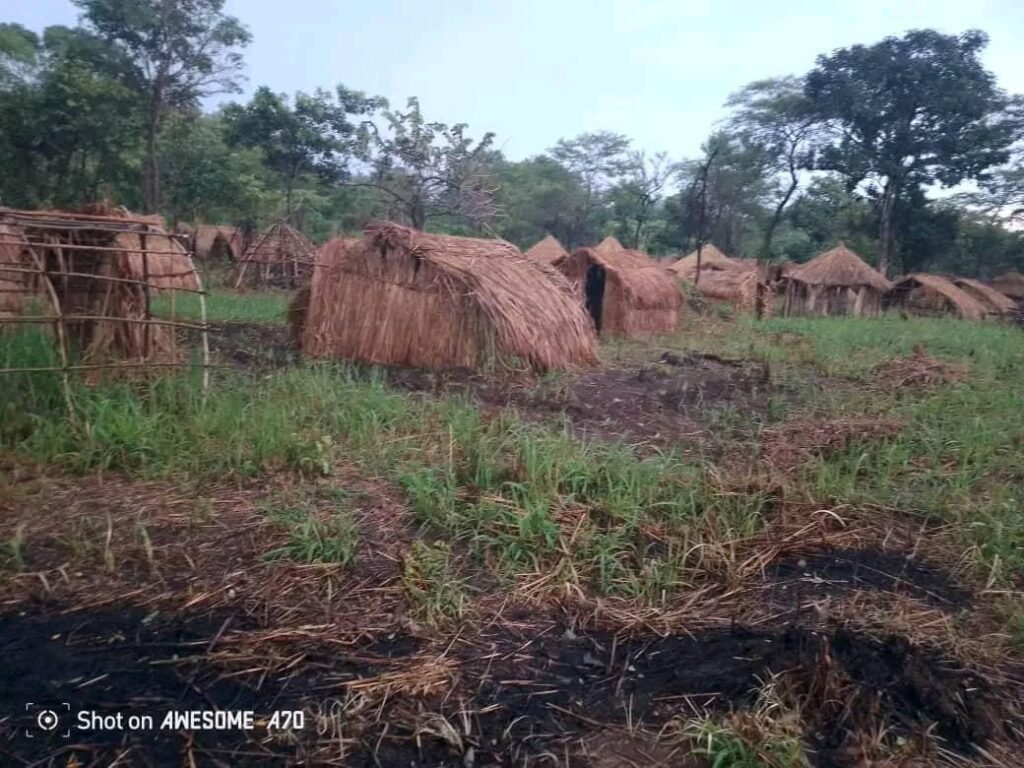
A humanitarian emergency is unfolding in Ibba County after scores of families displaced by attacks in Maruko village arrived with nothing but the clothes on their backs.
Local officials warn that hundreds of internally displaced persons (IDPs), mostly women and children, face life-threatening conditions without food, clean water, shelter, or health services.
Mr. Barbara Alison, the Infection Prevention and Control (IPC) Officer with the Ibba County Health Department, described the situation as “deeply alarming” after leading an assessment mission to Nanguruza, where most of the displaced are sheltering.
“The situation is dire. Women and children are sleeping in the open, without food or medical support. Some children were visibly sick, and there is absolutely no system in place to help them. This is a ticking time bomb,” Alison said.
The displacement began early last month when armed men attacked Maruko village, reportedly abducting youths for forced recruitment and looting civilian property. Terrified residents fled en masse to Ibba County.
“These armed men stormed the area, forcing youths into the bush and stealing from families. People had no choice but to flee,” Alison explained.
So far, local authorities have not been able to confirm the exact number of displaced families as new arrivals continue daily. Chiefs have been tasked with compiling accurate data for submission to the Relief and Rehabilitation Commission (RRC).
Despite the urgency, no official response has been issued by the Western Equatoria State government or the national authorities in Juba. Alison warned that delays could cost lives.
“The state has not yet responded. We hope that by Monday, this crisis will reach the state authorities. But we are already behind time,” he said.
The most immediate concerns, according to Alison, are access to safe drinking water, emergency food supplies, and temporary shelter. Pregnant women, children, and the elderly are reportedly the most vulnerable.
“The most urgent needs are safe drinking water, food, and shelter. These are non-negotiable. Without them, we will start losing lives,” Alison stressed.
In a call for action, local leaders and humanitarian actors are calling for urgent intervention.
According to humanitarian agencies like the United Nations Office for the Coordination of Humanitarian Affairs (OCHA), South Sudan remains one of the world’s most acute humanitarian crises, with more than 9 million people in need of assistance in 2025.
The new displacement in Ibba adds pressure to already stretched resources.
“Pregnant women, sick children, and entire families are living in extremely dangerous conditions. If help doesn’t come now, this will become a full-blown humanitarian tragedy,” Alison warned in a direct appeal to NGOs, aid agencies, and all levels of government.
As Ibba County scrambles to cope with the crisis, residents are left waiting, hoping that their plight will draw urgent attention before it spirals into catastrophe.