


A South Sudanese lawmaker has raised concerns over the lack of gender and regional diversity in a recent list of Indian scholarship recipients.
This prompting parliamentary debate on transparency and fairness in the selection process.
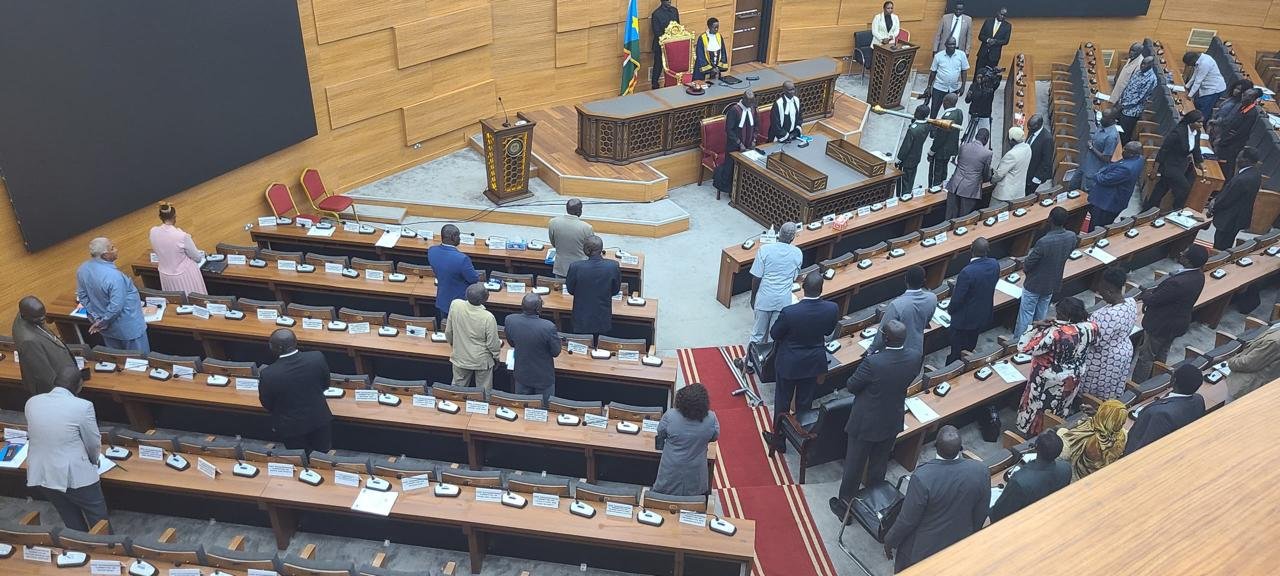
Hon. Stephen Bol, Member of Parliament representing Mayom County in Unity State, raised a point of information during Wednesday’s sitting (No. 4/2025) of the Transitional National Legislative Assembly (TNLA), citing irregularities in the Ministry of Higher Education’s handling of 30 Indian government-sponsored scholarships.
“I rise under Regulation 67 (d) and Article 80 of the Transitional Constitution to share information with this August House,” Hon. Bol stated.
He further stated that there is a clear irregularity in the recent scholarship list to India; no diversity and no female representation.
He urged the House to summon the Minister of Higher Education to clarify the matter.
The list in question reportedly included 30 students; 25 undergraduate, three postgraduate, and two PhD candidates selected to study in India.
However, critics argue that the selection process lacked inclusivity and transparency, particularly with regard to gender representation and regional balance.
Responding to the concern, Speaker Jemma Nunu Kumba acknowledged the issue, revealing that her office had already received similar complaints from students and the public.
“This issue was raised to my office by many students, Yesterday, we met with the Chairperson of the Specialized Committee on Higher Education, student representatives, and the Minister himself. He explained that these scholarships were private and applied for online. The selection was based strictly on merit, ranging from scores of 92 to 88.” She said
Speaker Nunu added that the Minister admitted the selection process was rushed, which led to the exclusion of some states and poor gender representation with only two female recipients.
“This mistake has been acknowledged, the Minister promised to put in place a more inclusive and fair mechanism for future scholarships, ensuring representation from all 10 states and three administrative areas.” She said
While she agreed the matter was serious, Speaker Nunu advised the Assembly to monitor future developments before calling the Minister to appear before the august house.
“The current batch of scholarships is closed. Let’s wait and see how the Ministry handles the next round. If the same exclusion happens again, then the Minister must come before this House,” she concluded.
The debate highlights ongoing concerns about equity in access to educational opportunities in South Sudan and the need for institutional reforms in scholarship management.