
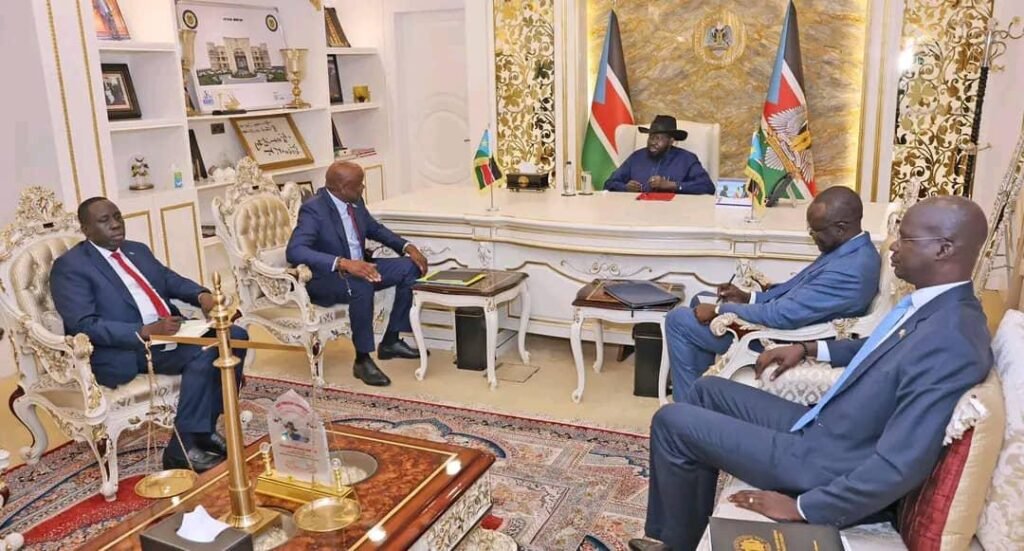
President Salva Kiir Mayardit has chaired a high-level consultative meeting with the country’s top economic managers, pledging renewed reforms aimed at lifting South Sudan’s struggling citizens out of the deepening cost-of-living crisis.
The meeting brought together Vice President and Chairperson of the Economic Cluster Dr. Benjamin Bol Mel, Finance Minister Athian Ding Athian, and Central Bank Governor Dr. Addis Ababa Othow to deliberate on urgent measures for economic recovery and stability.
For many South Sudanese, the question remains: how will this benefit the people on the ground?
According to insiders at the meeting, the leadership focused on practical strategies that could ease inflation, stabilize the pound, and create more opportunities for farmers, traders, and youth entrepreneurs.
The government also underscored its determination to strengthen fiscal discipline and reassure international partners ahead of the forthcoming IMF and World Bank Annual Meetings.
President Kiir emphasized that economic recovery will only be meaningful if ordinary households feel the difference.
“These reforms are not just numbers on paper; they are about the mother who struggles to feed her children, the farmer who needs fair prices for his produce, and the young graduate who dreams of a job,” Kiir reportedly told the meeting.
South Sudan’s economy has been battered by years of conflict, corruption, and global shocks. Ordinary families face skyrocketing food and fuel prices, with salaries often delayed or swallowed by inflation.
Analysts say that if the new reforms are backed with political will, they could improve market stability, increase trust in local banks, and attract investment that translates into jobs and services.
A Yambio trader, who sells sorghum at Masia market, expressed cautious hope citing that,
“If the government is serious this time, maybe prices will come down, and we can afford to eat without borrowing. What we want is not promises but action that touches our lives.”
The government has promised to present a unified and credible plan at the IMF and World Bank meetings. Experts note that such external support will only materialize if South Sudan demonstrates commitment to transparency, accountability, and long-term planning.
For now, citizens are watching closely, hoping that the new round of reforms will not remain political rhetoric but will instead deliver tangible relief to households weary of economic hardship.