
A groundbreaking new report has exposed a silent crisis in South Sudan: 92% of citizens do not have written wills, leaving thousands of families vulnerable to property loss, exploitation, and endless disputes when a loved one dies.
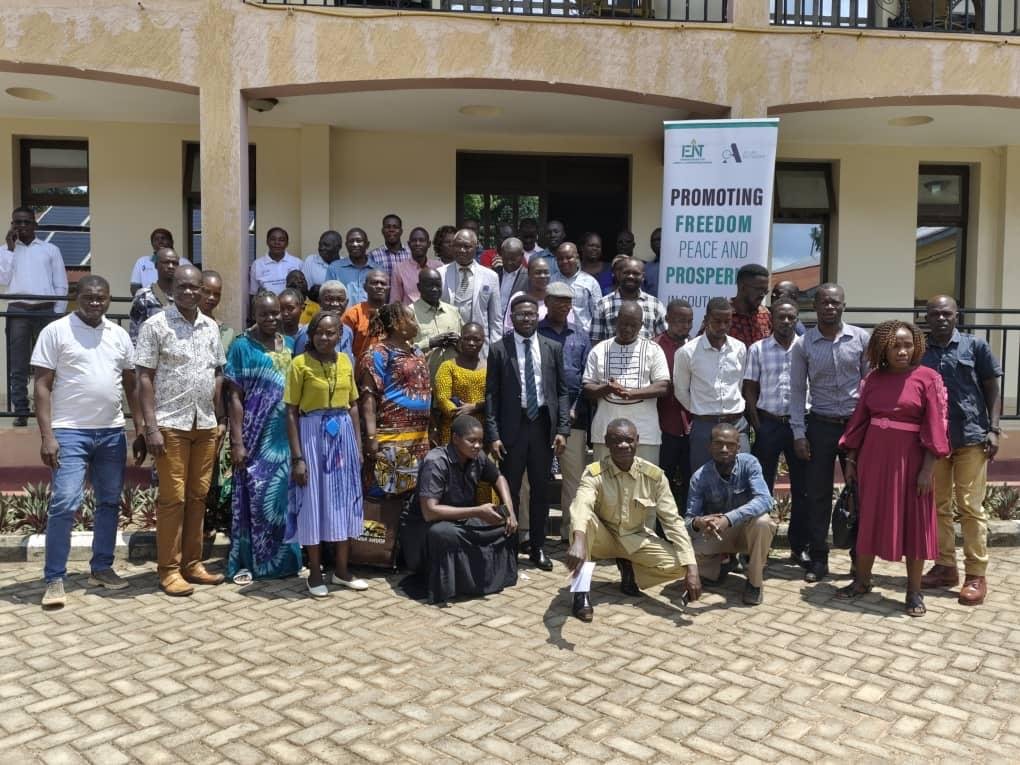
The findings were released Monday at a high-level policy dialogue in Yambio organized by the Organization for Liberty and Entrepreneurship (OLENT) under the theme “Ending Family Property Disputes.”
The forum brought together lawyers, bankers, chiefs, law enforcement officials, and civil society leaders to discuss reforms to inheritance and next-of-kin documentation a long-ignored issue that experts say has quietly fueled poverty and broken families.
According to the study, nine in ten citizens without wills also lack any formal documentation such as land titles or bank records, making it nearly impossible for widows, orphans, and other survivors to legally access property.
“From now on, being a next of kin should not automatically mean inheriting property,” explained Samuel Bati Agustin, an advocate who facilitated the training.
“Our goal is to pass this information to communities and reduce disputes. Families deserve peace of mind, not chaos, when someone passes away.”
The report also found that 87% of South Sudanese are unaware of their inheritance rights, while 95% of banks do not proactively inform families about dormant accounts or next-of-kin procedures.
For ordinary people in Yambio, the issue is deeply personal. “When my husband died, his brothers claimed our land and left me with nothing,” said Mary Pio, a widow in Yambio who attended the meeting.
“If there was a clear will, my children would still have a home. This campaign gives us hope that things will change for the next generation.”
Mr. David Benjamin Ginana, OLENT’s Executive Director, said the survey of 279 people across seven states revealed alarming levels of vulnerability.
“This report paints a troubling picture of the legal and financial limbo faced by thousands of families, civic education and policy reforms are urgently needed to protect inheritance rights and ensure that widows, children, and vulnerable groups are not pushed into poverty,” Ginana said.
Interestingly, the study showed that education alone does not solve the problem. Nearly half of respondents had completed secondary school and 31% had tertiary education, yet most admitted they had no knowledge of inheritance laws or documentation processes.
Experts say South Sudan can learn from other African countries that once faced similar challenges. In Ghana, reforms to inheritance laws in the 1980s created clearer protections for widows and children, reducing property disputes.
Kenya, through its Law of Succession Act, streamlined the process of writing wills and registering next of kin, while also empowering local chiefs to help mediate disputes.
In Uganda, civic education campaigns run by civil society have significantly increased awareness, particularly among rural families.
Stephen Dansu, a policy analyst from the Institute of Liberty and Policy Innovation in Ghana, praised OLENT’s initiative.
“This report is a crucial step toward empowering South Sudanese families to secure their future. Countries like Ghana and Kenya show that with proper laws and awareness campaigns, families can be protected from exploitation. South Sudan must act now.”
Call for Reform and Action, OLENT is urging the Ministry of Justice and Constitutional Affairs to work closely with civil society and financial institutions to draft a national inheritance law, strengthen next-of-kin documentation, and roll out civic education programs.
For communities like those in Western Equatoria, where disputes over land and property often escalate into bitter conflicts, the benefits could be transformative. A clear inheritance system would mean widows can stay in their homes, children can inherit their parents’ land, and families can avoid years of costly disputes.
“Wills are not just about property,” Ginana emphasized. “They are about dignity, justice, and protecting families from falling into poverty after losing a loved one.”
As the campaign gains momentum, civil society leaders say the ultimate goal is to normalize the culture of writing wills in South Sudan, ensuring that families no matter how rich or poor have their rights protected and their futures secured.