
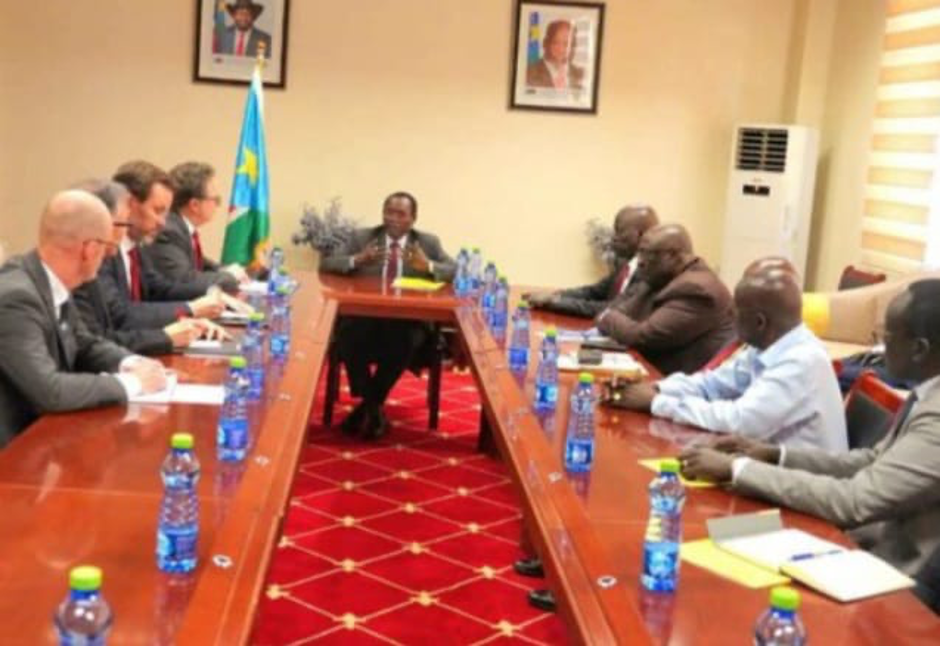
South Sudan’s Ministry of Foreign Affairs and International Cooperation has summoned the ambassadors of Germany, Japan, Norway and the United States over a joint statement in which the four countries raised concerns about the planned December 2026 elections.
The envoys were called to the ministry on Wednesday, August 26, following the issuance of the joint statement, which the government said raised concerns about the electoral process as the country prepares for the polls.
According to a statement issued by the Ministry of Foreign Affairs, Minister of Foreign Affairs and International Cooperation, Amb. Dr. James Pitia Morgan, expressed the government’s concern over the content and tone of the ambassadors coordinated position.
Dr. Morgan described the statement as “inappropriate and divisive,” saying such positions could affect efforts to create a peaceful and conducive environment for the electoral process.
During the meeting, the minister emphasized the importance of national ownership and respect for established diplomatic norms, including the principle of non-interference in the internal affairs of a sovereign state.
“The Government remains committed to ensuring that the country moves forward in an atmosphere of peace and stability,” the ministry said.
The government also reaffirmed its commitment to implementing the Revitalized Agreement on the Resolution of the Conflict in South Sudan, as well as preparations for the electoral process.
The four ambassadors were given an opportunity during the meeting to explain the basis and intentions behind their joint statement.
The ministry said the meeting was attended by senior officials from the Ministry of Foreign Affairs and International Cooperation.
The diplomatic exchange comes as South Sudan moves toward the December 2026 elections, a process that remains closely watched by regional and international partners.
The government has repeatedly maintained that the elections should be conducted in a peaceful and stable environment and has called on domestic and international stakeholders to support the implementation of the peace agreement.
Dr. Morgan urged regional and international partners to contribute constructively to efforts aimed at maintaining peace and stability as preparations for the elections continue.
The latest development highlights the growing diplomatic sensitivity surrounding the electoral process, with the government emphasizing national sovereignty while international partners continue to scrutinize preparations for the polls.
With the elections approaching, the government is expected to face continued pressure to demonstrate that the electoral process is inclusive, credible and consistent with the country’s peace commitments.
For South Sudan, the ability of political leaders, civil society, regional partners and the international community to manage their differences peacefully could be crucial to maintaining stability as the country moves toward the December 2026 polls.