



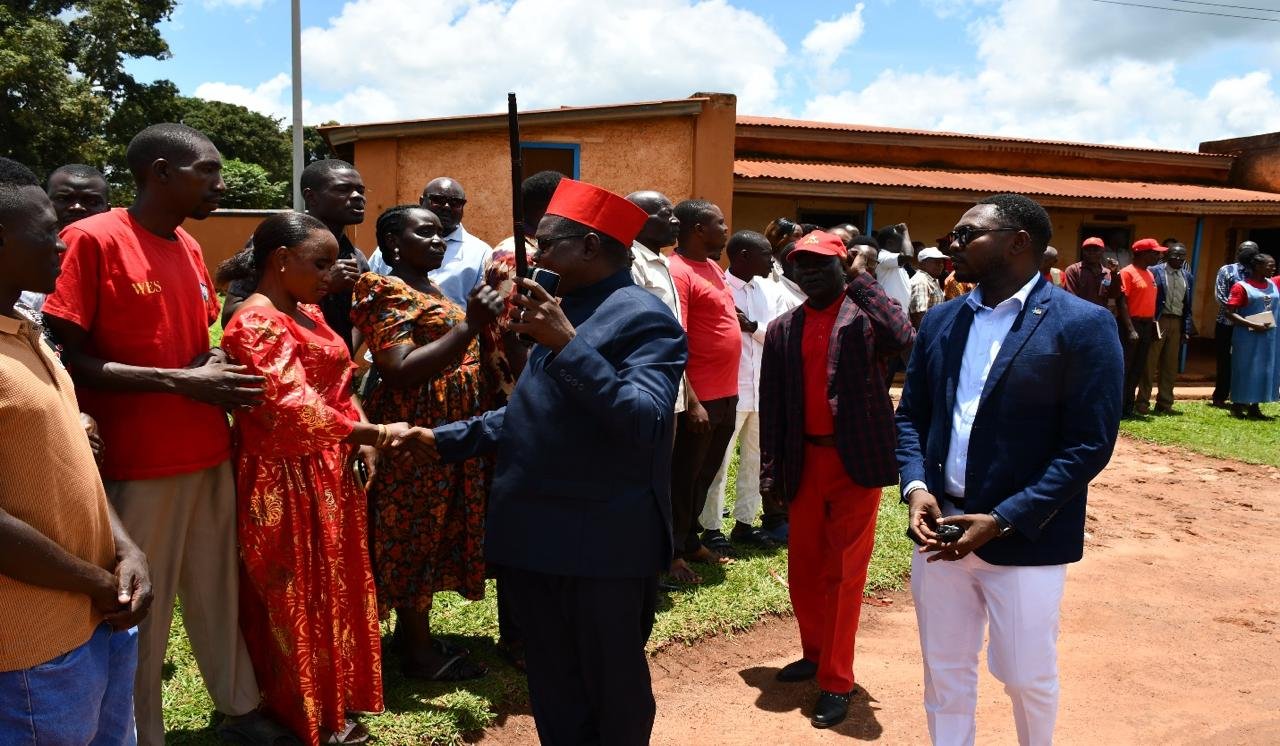
In what political observers are calling a defining moment for the ruling Sudan People’s Liberation Movement (SPLM) in Western Equatoria State, the newly appointed Governor and SPLM State Chairperson presided over his first official meeting with the party Secretariat since assuming office earlier this month.
The meeting, held at the SPLM State Secretariat in Yambio, gathered senior party officials including the State Deputy Chairperson, the State Secretary, and Secretariat members.
It marked the first formal interaction between the new state leadership and the party machinery, and concluded with what participants described as “positive and forward-looking resolutions.”
Addressing the press shortly after the session, part chairman Cde. Barrister James Al Taib Berapai underscored the need for unity and collaboration, stressing that the SPLM’s strength lies in working hand-in-hand with the executive branch of government to deliver meaningful change.
“This inaugural meeting was not only about party matters but about the future of our people,” he told reporters.
“We discussed key issues, particularly the situation in Kadiba area of Mundri East County, and we resolved that the way forward must be rooted in strong cooperation between the party and the executive. That is the only way to keep SPLM connected to the people and true to its values.”
The Governor also reflected on his appointment by the President of the Republic and National Chairman of the SPLM, saying he was “deeply humbled” by the trust placed in him and grateful for the warm reception he received from SPLM cadres upon assuming office two weeks ago.
One of the pressing issues tabled during the meeting was the ongoing situation in Kadiba, Mundri East County an area that has faced repeated security and livelihood challenges.
Party officials emphasized that the plight of the people in Kadiba reflects wider concerns across Western Equatoria, where communities continue to grapple with insecurity, limited infrastructure, and fragile access to social services.
“Our people in Kadiba, and indeed across Western Equatoria, need more than words,” the Governor said firmly. “They need a government and a party leadership that acts, listens, and delivers. This is what we are preparing ourselves to do.”
Participants at the meeting described the atmosphere as “energized and purposeful.” According to Secretariat members, discussions touched on internal party cohesion, the welfare of cadres, and the role of SPLM structures in promoting grassroots participation.
The resolutions adopted called for, strengthening coordination between the Secretariat and the state executive, reinforcing communication with local communities to rebuild trust.
Expanding youth and women participation in political and developmental activities, enhancing visibility of the SPLM’s leadership in responding to local challenges.
The Governor signaled that this was only the beginning of what he termed a “new chapter of people-centered leadership” for the SPLM in Western Equatoria.
Analysts note that the Governor’s early moves will be closely watched both within Western Equatoria and beyond. As the state continues to navigate issues of governance, service delivery, and peace building, the SPLM’s ability to remain connected to its grassroots will play a critical role in shaping political stability ahead of the 2026 elections.
The Governor’s message of unity also comes at a time when the SPLM nationally is seeking to reassert its legacy as a liberation movement that must now deliver development, accountability, and stability in the post-conflict era.
For the people of Western Equatoria, the message from their new SPLM Chairperson was clear: cooperation, unity, and action will define the path forward.
“We cannot afford to work in isolation. The SPLM Secretariat and the executive must function as one body, one vision, one mission,” the Governor emphasized. “That is the only way we can deliver a better future for our people.”
As the Secretariat’s resolutions are set in motion, communities across Western Equatoria will be watching closely to see if this renewed spirit of leadership can translate into tangible improvements in security, livelihoods, and governance.
For now, the first meeting of the SPLM Secretariat under the new chairmanship has set a tone of seriousness, inclusivity, and resolve one that many hope will mark the beginning of a more responsive and united leadership for the state.


