
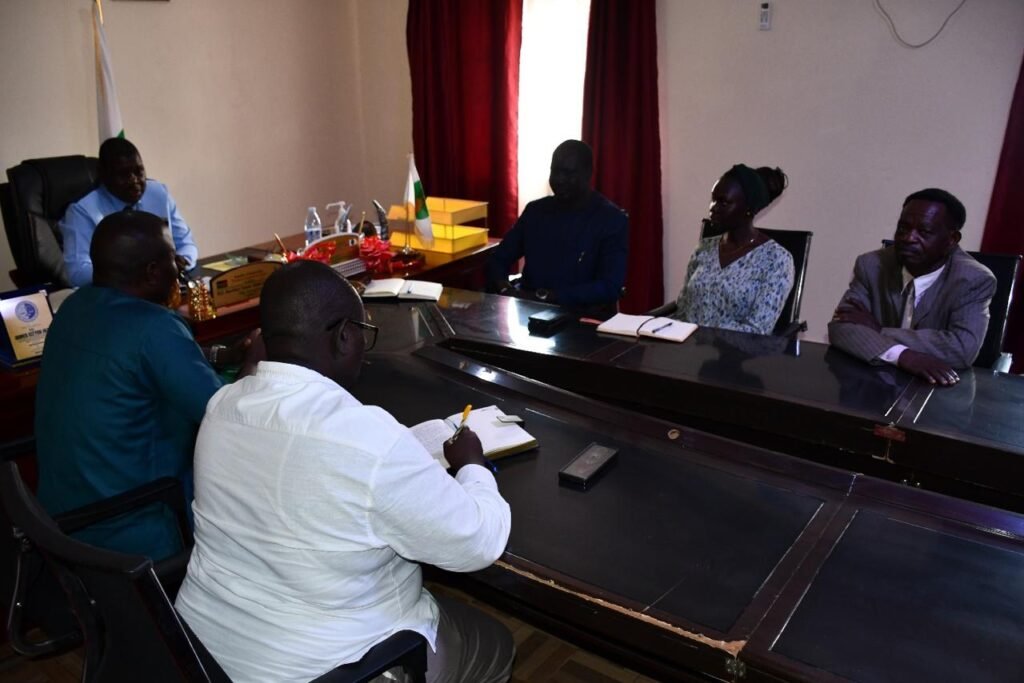
For the first time in three years, Western Equatoria State is on track to secure a functional budget following the intervention of a high-level delegation from the National Ministry of Finance and the support of international partners.
A team from Juba, led by Mr. Deng Marial Agoc of the National Ministry of Finance, arrived in Yambio last week on a seven-day mentoring mission aimed at helping the State Ministry of Finance, Planning and Investment prepare what they described as a “sound budget.”
“We came here to guide and give support in the budget preparation process. A sound budget means one that is properly aligned with government mandates and activities,” Mr. Agoc explained.
“This mission, supported by our good partners, particularly the World Bank, will ensure Western Equatoria finally has a draft budget ready for approval.”
Western Equatoria has operated without a proper budget since 2022, a situation that has hampered service delivery and delayed key development programs across the state.
State Minister of Finance, Planning and Investment, Hon. Bazia Tito Morris, welcomed the delegation, stressing the urgency of ending the budget vacuum.
“Budget is the backbone of service delivery. Without it, we cannot provide for the people of Western Equatoria,” Minister Morris said after a meeting with Governor James Al-Taib Jazz Berapai.
“We are grateful to the National Ministry of Finance for sending this team. It has been too long since 2022 without a proper budget, but this time, we are determined to deliver one in time for our people.”
The Governor reportedly assured the delegation of his full cooperation, underscoring that transparent financial planning is a key part of his mandate to strengthen governance and service delivery.
Observers note that the involvement of the World Bank is critical, as the institution has been at the forefront of supporting South Sudan’s fiscal reforms, particularly in promoting accountability and improving public financial management systems.
According to a recent World Bank report, the absence of state budgets across the country has contributed to weak service delivery, especially in education, health, and infrastructure.
Economists argue that the Western Equatoria initiative could serve as a model for other states struggling with budget formulation.
Dr. David Lomoro, a Juba-based financial analyst, told The Nation that “bringing states back into proper budgetary frameworks is essential for decentralization and service delivery. If Western Equatoria succeeds, it could pressure other states to follow suit.”
For many residents, however, the promise of a budget is tied to hope for tangible improvements.
“We have waited years for better services in health and education. If this budget comes through, it must not just be numbers on paper it should bring change to our lives,” said Mary John, a teacher in Yambio.
As the mentoring mission concludes this week, both national and state officials say they are confident Western Equatoria will finally approve a budget before the end of 2025 marking a potential turning point in the state’s governance and service delivery