

• Latest
  • Trending
  • All
7.7 million South Sudanese at risk of starving as hunger strikes due to acute food shortages

7.7 million South Sudanese at risk of starving as hunger strikes due to acute food shortages

1 year ago
Kiir sets limits on election dialogue, rules out political negotiations

Kiir sets limits on election dialogue, rules out political negotiations

3 weeks ago
Inter-party dialogue kicks off in Juba ahead of December polls

Inter-party dialogue kicks off in Juba ahead of December polls

3 weeks ago
Election bill gives Kiir full powers as VPs face three-month exit

Kiir appoints caretaker ministers, governors after dissolving transitional gov’t

4 weeks ago
NSIF sets October for social insurance registration

NSIF sets October for social insurance registration

4 weeks ago
Wani Igga Calls for National Transformation Through Forgiveness, Unity

Wani Igga Calls for National Transformation Through Forgiveness, Unity

4 weeks ago
Western Equatoria Education Ministry Moves to Improve Exam Results as 6,678 Candidates Prepare for November Tests

Western Equatoria Education Ministry Moves to Improve Exam Results as 6,678 Candidates Prepare for November Tests

4 weeks ago
  • About
  • Podcast
  • Magazines
  • Contact
Saturday, October 17, 2026
  • Login
The Nile Witness
  • Home
  • News
  • Politics
  • Business
  • Health
  • Culture & Literature
  • Opinion
  • Sports
No Result
View All Result
  • Home
  • News
  • Politics
  • Business
  • Health
  • Culture & Literature
  • Opinion
  • Sports
No Result
View All Result
The Nile Witness
No Result
View All Result
Home Top Stories

7.7 million South Sudanese at risk of starving as hunger strikes due to acute food shortages

By John Abit

June 13, 2025
in Top Stories
236 18
0
7.7 million South Sudanese at risk of starving as hunger strikes due to acute food shortages

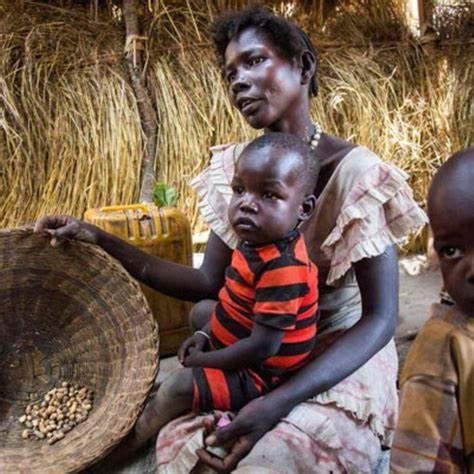
A picture of a mother and her child at risk of starving due to food shortage / Courtesy photo

493
SHARES
1.4k
VIEWS
Share on FacebookShare on Twitter

A joint report by South Sudan government and U.N. agencies on food security for 2025 has revealed that 7.7 million of the population face acute food shortages.

A report by the World Food Program, UNICEF and the Food and Agriculture Organization (FAO) claimed that the looming hunger is cause by conflict in most part of the country that did not allot people to cultivate.

Addressing the participates during the release of the Integrated Food Security Phase Classification (IPC), FAO South Sudan representative Meshak Malo Said that the recent conflict in the country has put many people in serious hunger.

“The population of 83,000 was not there last year but has emerged due to conflict, particularly in Upper Nile and Pibor,” Malo said.

He urged South Sudan government to bring peace and stability to the country as well collaborating with the partners to reduce food insecurity.

Mary-Ellen McGroarty, WFP’s South Sudan director, said 200,000 young children in four Upper Nile counties are at high risk of malnutrition. However, she noted some improvement in areas where stability allowed farming and market recovery.

Anita Kiki Gbeho, the U.N. humanitarian coordinator for South Sudan, called for urgent intervention. “We must act now,” she said, stressing the need for peace to ensure aid effectiveness.

Hussein Abdelbagi Akol, South Sudan’s agriculture minister, pledged government support for farmers to boost production.

“We must stabilize our economy to protect citizens from suffering,” he said.

Edmund Yakani, a civil society activist and the Executive Director for Community Empowerment for Progress Organization (CEPO) urged better security and investment in agriculture using non-oil revenue.
“Military confrontation only worsens food insecurity,” he said.

The IPC reports

The Integrated Food Security Phase Classification (IPC), the leading global measure for hunger crises, declares famine when: 20% of households face extreme food shortages; at least 30% of children suffer acute malnutrition; and two adults or four children per 10,000 people die daily from hunger-related causes.

The latest IPC report, released in Juba today, estimates that 2.4 million people will face emergency food shortages and 5.2 million will be in crisis between April and July 2025. Conflict, low agricultural production, economic instability and climate shocks are key drivers of food insecurity.

Last year’s IPC report projected 7.7 million South Sudanese would face severe hunger between April and July 2024.

Share197Tweet123
admin

admin

The Nile Witness

© 2026 THE NILE WITNESS

Get To Know Us

  • About
  • Podcast
  • Magazines
  • Contact

Follow Us

Welcome Back!

Login to your account below

Forgotten Password?

Retrieve your password

Please enter your username or email address to reset your password.

Log In

Add New Playlist

No Result
View All Result
  • Home
  • News
  • Politics
  • Business
  • Health
  • Culture & Literature
  • Opinion
  • Sports

© 2026 THE NILE WITNESS

Are you sure want to unlock this post?
Unlock left : 0
Are you sure want to cancel subscription?
Go to mobile version