


The Western Equatoria State Ministry of General Education and Instruction says it is stepping up preparations for the November national examinations, with 6,678 primary and secondary school candidates registered to sit for the Primary Leaving Examination and Senior Four examinations across the state
The ministry says examination centres are being prepared, index numbers for Primary Eight candidates have already been distributed to schools, and measures are being put in place to address logistical and security challenges that could affect candidates in remote and conflict-affected areas.
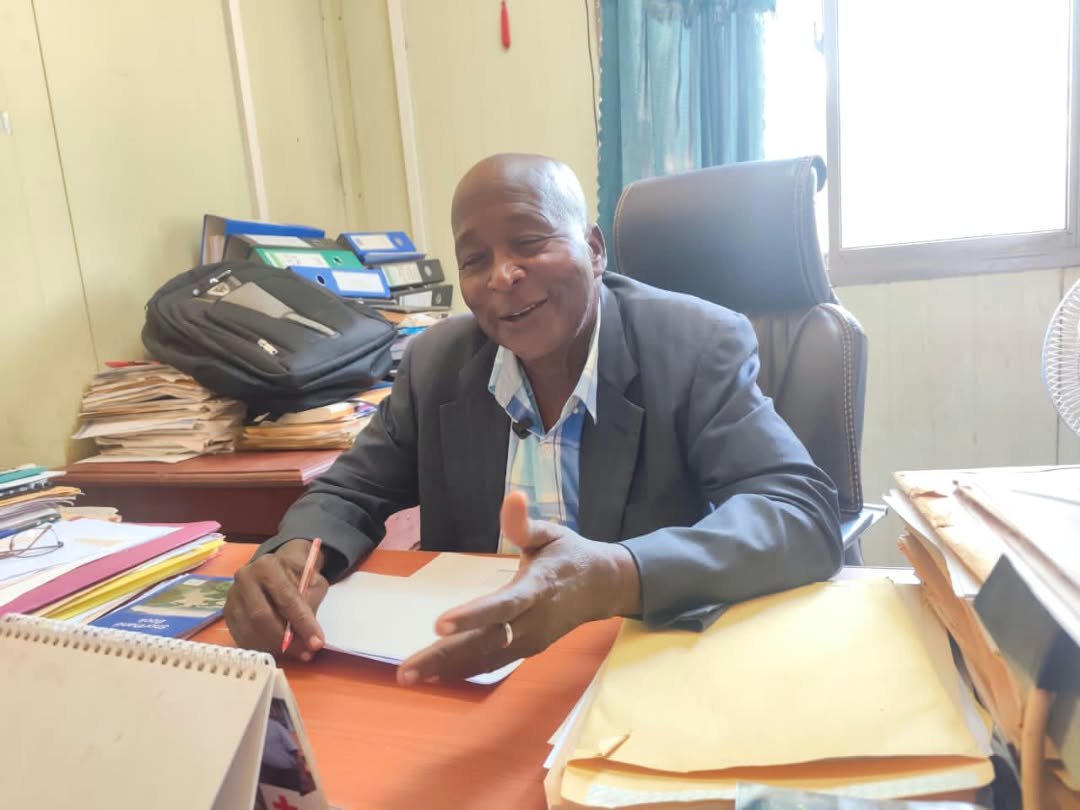
Speaking exclusively to The City Review, Sebit Philemon Zagi, Director for Basic Education and currently serving as Acting Director General in the State Ministry of General Education and Instruction, said the state was determined to improve its performance after what he described as disappointing results in previous national examinations.
“We are not actually sleeping. But we are trying our level best for the best,” Zagi said, appealing to candidates, teachers, parents and other education stakeholders to work together ahead of the examinations.
According to Zagi, 4,605 candidates from 10 Counties have been registered to sit for the Primary Leaving Examination.
The figure includes 2,416 female candidates and 2,189 male candidates, according to the figures provided by the Acting Director General.
Zagi said 10 examination centres had already been identified and prepared, although some schools with small numbers of candidates would be combined into common examination centres.
“The schools which are going to sit for the PLE, I think there are ten. The total number of candidates who are supposed to sit for this examination is 4,605,” Zagi said.
He added that the state was also working to ensure teachers and other personnel required for the examination were prepared.
“The centres for the examination are already made clear, but with the exception that there are some schools which are not in good numbers. We are going to combine them in one centre, but the centres are ready and the number of candidates are ready,” he said.
At the secondary school level, the ministry has registered 2,073 candidates for the Senior Four examination.
The figure comprises 1,132 male candidates and 941 female candidates, according to the ministry.
Zagi said the candidates were being prepared and the ministry was now working toward ensuring that the remaining examination arrangements are completed before the tests begin.
“Those who are going to sit for Senior Four Living Certificate, there are 2,073,” he said.
The ministry has so far received Primary Eight index numbers and distributed them to schools, while index numbers for secondary school candidates were still pending at the time of the interview.
“The one which we have received so far is the one for primary. The one for secondary schools, we have not yet received it,” Zagi said.
Despite progress in preparing examination centres and registering candidates, the ministry says transporting examination materials and deploying invigilators to some parts of the state remains a major challenge.
Zagi said the ministry had learned from logistical difficulties experienced during previous examinations, particularly in reaching counties outside Yambio.
He said transporting examination papers and other materials to areas such as Nzara, Ezo and other counties requires careful planning.
“Last year, concerning these logistic issues, there were a lot of challenges we faced during the time when the examination papers came,” Zagi said.
“The problem is how to take it to Nzara, Ezo and so forth, the outside counties. These are problems sometimes, of how to transport it.”
The ministry is also still working on arrangements for invigilators who will supervise the examinations.
Zagi said the authorities were identifying and preparing personnel who would be responsible for invigilation.
Security remains another concern for education authorities, particularly in areas that have previously experienced instability.
Zagi cited Nagero County and Mundri East among areas where insecurity could affect examination arrangements.
He recalled that during the previous examination period, some candidates from Nagero were unable to sit their examinations within the state and instead travelled to Western Bahr el Ghazal State.
“In the case of Nagero, the few candidates who were there moved to Western Bahr el Ghazal State. So the exams were taken to them there,” he said.
Zagi said the ministry was yet to receive a concrete security assessment confirming that examination materials could safely reach Nagero this year.
“If not, of course, the same thing will happen. The exams will be taken to Wau, and those students who are there will come to Wau and sit for their examination,” he said.
He also said candidates affected by insecurity in parts of Mundri East could potentially be brought together at a safer examination location.
“If at all it is still there, then all the candidates of various places will gather in Mundri West and they will sit their examination there,” Zagi said.
He stressed that security arrangements ultimately fall under the responsibility of the relevant security authorities and administration.
The Acting Director General acknowledged concerns over Western Equatoria’s performance in national examinations in recent years, saying some candidates and schools have recorded very poor results.
He said the poor performance had affected the image of the state and prompted education authorities to consider additional measures to improve academic outcomes.
“We are aware of this poor result of our students, candidates in entire Western Equatoria. We are aware of it and even it has given us really very bad image,” Zagi said.
He said the current Minister of General Education and Instruction had taken the issue seriously and that the ministry was working on interventions aimed at improving students’ performance.
Among the measures being encouraged is increased academic coaching for examination candidates.
“That’s why some other things like coaching, we are going to encourage this issue of coaching in the schools,” Zagi said.
He added that teachers involved in coaching programmes also need motivation to enable them to effectively support candidates.
“The teachers who are coaching them must be motivated so that they can carry out their duties efficiently,” he said.
Zagi said the issue of poor examination performance had also been raised with the state government.
“Last year the result was very bad. It was very bad, even one of Senior Four,” he said.
With the examinations approaching, the Acting Director General urged candidates to dedicate more time to their studies and avoid activities that could distract them.
He advised candidates to reduce unnecessary social activities and concentrate on revision, particularly as the examination period approaches.
“During the time when the exams are very near, close everything else. We absent ourselves from it. Just concentrate on study in groups,” Zagi advised.
He specifically cautioned candidates against spending excessive time in public places, dancing and other activities that could interfere with their preparation.
“Let them concentrate on reading their books,” he said.
Zagi also encouraged Senior Four candidates to revise material from earlier secondary school levels because examination questions are not necessarily restricted to the final year alone.
“Let them revise the books and start from Senior Four, starting from Senior Three, because the exams are not concentrated only in Senior Four. It comes through Senior Two and Senior Three,” he said.
The ministry is also encouraging teachers to make greater use of past examination papers as part of candidates’ preparation.
Zagi urged teachers to obtain available past papers, explain the questions to students and conduct practice tests before the national examinations.
“If they have a chance to get past papers, they can even go through them. And for the teachers who are teaching the candidates, let them also try their level best to get these past papers, explain and make some tests to their candidates,” he said.
He also encouraged group revision, saying students could question and test one another as part of their preparation.
However, Zagi placed part of the responsibility for students’ performance on parents, urging families to reduce household responsibilities assigned to children during the examination preparation period.
He said children returning from school should be given sufficient time to study rather than being immediately assigned domestic or agricultural work.
“We, as parents, are really contributing a lot to the failure of our children because we are giving them no space for studying at home,” he said.
The Acting Director General appealed to parents to temporarily reduce duties such as farming and other household activities for children preparing for examinations.
“Let them be free from any work at all,” he said.
He also encouraged families to provide adequate lighting so that children can revise at night.
“If there is no lamp at home, nowadays so many lights people are buying from the market. You buy it for your child. Let your child at least an hour at night, one hour, revise,” Zagi said.
As Western Equatoria prepares to send thousands of candidates into the national examination system, the education authorities say improving results will require cooperation between the ministry, teachers, students and parents.
Zagi said the ministry remained committed to improving the quality and image of education in the state despite the logistical, security and academic challenges.
“We are not actually sleeping. But we are trying our level best for the best,” he said.
The November examinations will therefore provide another important test for the state’s education system, not only for the candidates sitting for the papers but also for the ministry’s efforts to address previous performance concerns.
With 4,605 Primary Leaving Examination candidates and 2,073 Senior Four candidates registered, education authorities are now racing against time to finalize examination logistics, address security-related challenges, deploy invigilators and ensure candidates are adequately prepared before the examinations begin.


