
The Ceasefire and Transitional Security Arrangements Monitoring and Verification Mechanism (CTSAMVM) has urged the parties to the Revitalized Agreement on the Resolution of the Conflict in South Sudan (R-ARCSS), including the SSPDF and SPLA-IO, to refrain from fighting, abductions, forced recruitment and attacks against civilians.
The call followed deteriorating reports of abductions and alleged forced recruitment in Bongolo, Loso and Lanyi in Greater Mundri, Western Equatoria State, which contributed to the displacement of civilians.
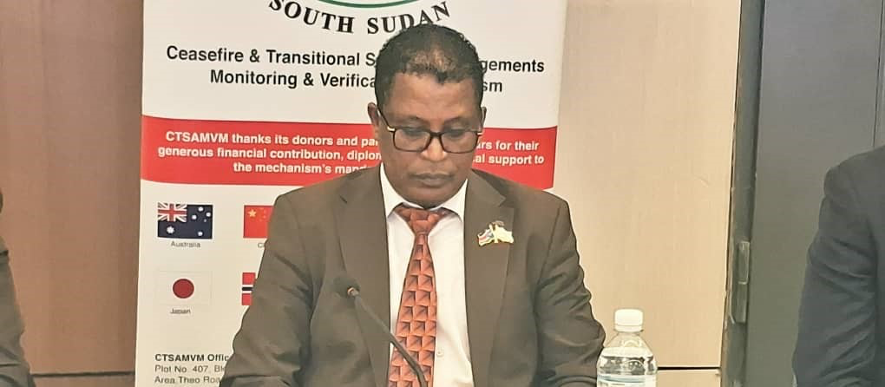
Speaking at a CTSAMVM Technical Committee meeting in Juba on Tuesday, CTSAMVM Chairperson Maj. Gen. Dr. Hailu Endashaw Atomsa said such actions impede humanitarian operations and undermine the protection of humanitarian personnel, assets and relief supplies as provided for under the Permanent Ceasefire and the parties’ obligations under the Peace Agreement.
“In Greater Equatoria, the security situation remained relatively stable. However, in Greater Mundri, Western Equatoria State, the situation deteriorated following reported abductions and alleged forced recruitment in Bongolo, Loso and Lanyi, which contributed to the displacement of civilians,” the statement read.
Endashaw stressed the importance of continued restraint, dialogue and cooperation among all parties amid the deteriorating security situation.
He urged the Transitional Government of National Unity (RTGoNU) to strengthen civilian protection along high-risk roads and in conflict-prone areas through coordinated security deployments, improved early-warning mechanisms and timely preventive action.
“The security situation across South Sudan remains unpredictable. Although major military confrontations showed a downward trend during the reporting period, inter-communal tensions, cattle-related violence, restrictions on humanitarian access, and threats to civilians and humanitarian personnel continued to pose significant security concerns,” the statement partly read.
Endashaw said the developments underscored the need for sustained restraint, dialogue and commitment by all signatory parties to uphold the Permanent Ceasefire and advance implementation of the R-ARCSS.
CTSAMVM also strongly condemned the attack on a UNMISS patrolling convoy in Pajut, Jonglei State, which killed two peacekeepers and injured several others.
“This deplorable attack against personnel dedicated to supporting peace and protecting civilians in South Sudan. Such acts undermine peacebuilding efforts and are unacceptable under international law. We urge the relevant authorities to ensure a prompt and thorough investigation so that those responsible are held accountable,” the statement continued.
The monitoring body also raised concern over continued attacks along key roads, including the reported ambush of humanitarian trucks on the Buaji–Dollo road and the abduction of three humanitarian workers along the Yei–Lasu road.
It said the incidents further highlighted the risks facing civilians, humanitarian personnel and freedom of movement.
Greater Upper Nile remained the most volatile region during the reporting period, with continued reports of attacks against civilians and restrictions on humanitarian access.
In Greater Bahr el Ghazal, the security situation remained relatively stable despite continued localized incidents of cattle-related violence, inter-communal tensions and criminality.
Of particular concern was the reported attack on communities in Tonj North County, Warrap State, on 9 August, allegedly involving armed youth from Mayom County in Unity State. The incident reportedly resulted in fatalities and injuries among civilians.
Additional localized violence was also reported in Western Bahr el Ghazal and Lakes states, including inter-community clashes and cattle raiding.
CTSAMVM called on all signatory parties to maintain restraint, strengthen cooperation and uphold their commitments under the Permanent Ceasefire and the R-ARCSS to help protect civilians and create conditions conducive to peace and humanitarian operations.