
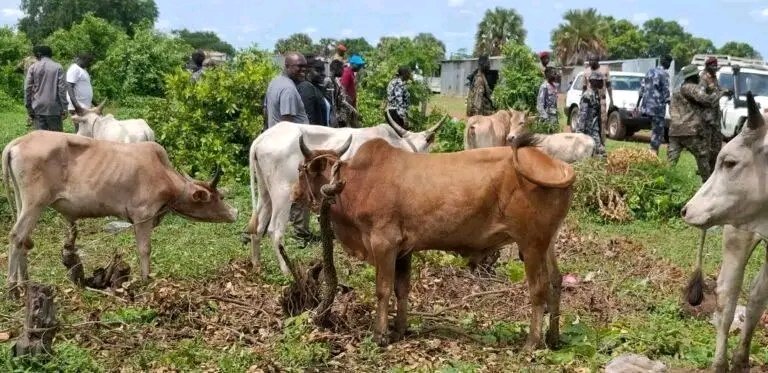
More than 800 cattle have reportedly been taken from communities in Greater Mundri, Western Equatoria State, during recent raids, prompting the state government to call for their peaceful recovery and return.
Western Equatoria State Governor Daniel Badagbu Rimbasa said the cattle were among livestock taken during recent incidents involving communities in Greater Mundri and the neighbouring Mundari community in Central Equatoria State.
The governor said the government was pursuing a non-confrontational approach to recover the animals, urging communities in possession of the cattle to voluntarily return them to their rightful owners.
Rimbasa said the government’s priority was to resolve the dispute through dialogue rather than allowing the cattle raids to trigger further tensions between communities.
The governor said affected communities had committed to returning cattle in their possession, describing the commitment as an important step toward resolving the dispute.
He called on community leaders and residents to cooperate with efforts to identify, recover and return the animals.
The government has also established a committee to follow up on the recovery process and engage communities and other stakeholders involved in the dispute.
The committee is expected to travel to Lui in Western Equatoria State as part of efforts to facilitate the recovery of the cattle.
Rimbasa said the committee would also engage a man identified as Bukulu, who is reportedly in possession of some of the cattle, and encourage him to surrender the animals voluntarily.
“Dialogue and cooperation are key to resolving this dispute and strengthening relations between our communities.” Governor Daniel Badagbu Rimbasa.
According to the governor, the cattle dispute is not confined to Western Equatoria.
While more than 800 cattle were reportedly taken from communities in Greater Mundri, about 65 cattle were also reportedly raided from the Mundari community in Central Equatoria State.
The figures highlight the scale and cross-state nature of the dispute, which has raised concerns over relations between communities living in neighbouring states.
Rather than pursuing retaliation, the Western Equatoria government is seeking to facilitate the recovery of the livestock through engagement with community leaders and those alleged to be holding the cattle.
Rimbasa said cattle recovered during the process would initially be herded in Rokon, Central Equatoria State, as authorities work to establish arrangements for their eventual return.
The temporary holding arrangement is expected to help authorities organize the recovered livestock and facilitate their identification and transfer to the affected communities.
The governor urged all parties to refrain from taking matters into their own hands and instead cooperate with the committee tasked with resolving the dispute.
The latest intervention comes amid concerns that cattle raids can fuel retaliatory attacks, deepen mistrust and undermine peaceful relations between neighbouring communities.
The state government is therefore encouraging voluntary restitution as a way of preventing the dispute from escalating into further conflict.
Rimbasa appealed to communities on both sides to prioritize peaceful coexistence and avoid actions that could undermine efforts to recover the cattle.
The government says successful recovery of the animals would not only address the immediate losses suffered by affected cattle owners but could also help rebuild confidence between communities in Western and Central Equatoria.
The recovery process now depends on cooperation from communities and individuals believed to be in possession of the animals.
For the state government, the message remains that the cattle dispute should be resolved through dialogue, voluntary return and community cooperation—not retaliation.