
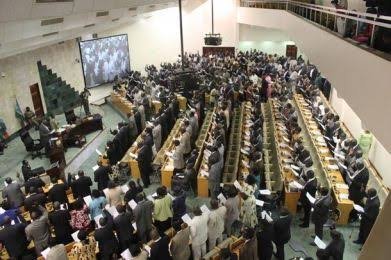
South Sudan’s parliament has unanimously passed Constitutional Amendment Bill No. 13, clearing a major legal hurdle ahead of the country’s planned general elections on December 22, 2026.
The amendments will allow the elections to proceed without waiting for the completion of a permanent constitution or a national population and housing census. Both processes are expected to continue separately after the elections, removing requirements that have been viewed as potential obstacles to the long-delayed vote.
Lawmakers approved the bill on September 1 during a closed-door sitting. Speaker Joseph Ngere Paciko directed journalists and members of the public to leave the chamber, citing national security, sovereignty, public order and social stability.
Parliament spokesperson Oliver Mori Benjamin later confirmed that the legislation had been passed unanimously.
The move follows earlier amendments to the 2018 Revitalized Peace Agreement, which also removed provisions requiring the permanent constitution and national census to be completed before elections could take place.
Supporters of the changes say they are designed to create a clearer legal path for election preparations and prevent further delays.
But the road to the December elections remains challenging. The National Elections Commission has previously highlighted legal, financial and logistical constraints facing the electoral process, while opposition groups and international partners have raised concerns about whether the political and security environment is ready for a credible, peaceful and inclusive vote.
The amendment bill now goes to President Salva Kiir for assent. Under the Transitional Constitution, the president has 30 days to sign the legislation or return it to parliament with reasons for reconsideration.
If the elections proceed as scheduled, the December vote would mark a significant moment in South Sudan’s political history.
The country has postponed national elections several times since gaining independence in 2011, making the planned 2026 polls a closely watched test of its transition toward a more stable and democratic political system.