
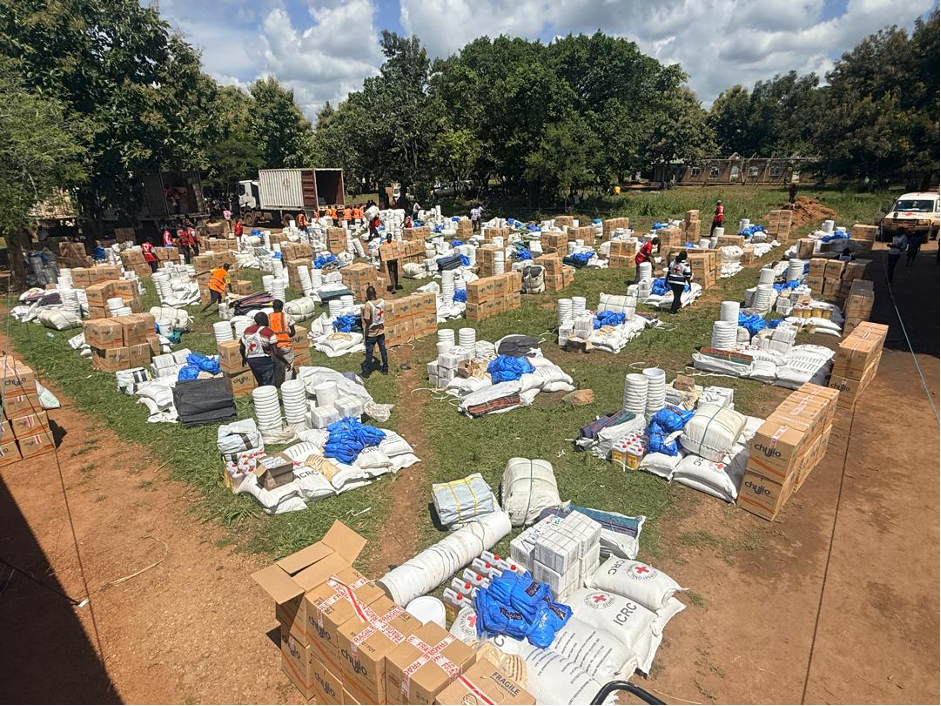
The South Sudan Red Cross (SSRC), in partnership with the International Committee of the Red Cross (ICRC), has intensified emergency assistance to thousands of South Sudanese returnees arriving in Kajo-Keji County.
The returnees are arriving from refugee camps and border areas in neighbouring Uganda.
The humanitarian operation is targeting 2,600 households in Liwolo Payam, where returnees are settling as they seek to reclaim ancestral land and prepare for cultivation.
The influx comes amid heightened tensions over disputed border areas and growing movement of South Sudanese returning home ahead of the country’s upcoming elections.
Joseph Lukak, Head of Branch for SSRC Juba, said distributions are progressing across several locations.
Aid deliveries have already been completed in Mangalatee, Keriwa and Sokare, while distributions are currently underway in Mangalatee
However, beneficiaries and community leaders say the assistance, while urgently needed, is not always sufficient to meet the needs of larger families.
One beneficiary said some families of up to 14 people receive only a single mat, making it difficult for them to cope with their living conditions.
“Sometimes you have a family of 14 people, but you get one carpet. It is not enough for us,” the beneficiary said.
The concern has prompted calls for humanitarian agencies to consider verified household sizes when determining the quantity of relief items distributed to families.
Beyond the distribution of essential household items, SSRC and ICRC teams are working to rehabilitate critical infrastructure in areas receiving returnees.
The organisations are repairing damaged water boreholes to improve access to safe water, while also providing protection and family-links services to help people separated by conflict and displacement reconnect with relatives.
As part of the family-links support, teams are providing free mobile phone airtime to enable separated family members to communicate across borders.
Community leaders have welcomed the humanitarian response, particularly after logistical challenges caused by poor road conditions delayed the delivery of assistance.
They have, however, urged humanitarian organisations to maintain continuous registration of returnees to ensure that newly arriving households are not left out of assistance programmes.
Justin Kenyi Peter, speaking on behalf of the community, expressed gratitude to the Red Cross, humanitarian partners, donors and volunteers for their support.
“This support comes at a very important time and will make a meaningful difference in the lives of many families, especially vulnerable children, women, elderly people, and those facing difficult circumstances,” Peter said.
He said the assistance had brought not only food and essential supplies, but also “hope, dignity and encouragement” to communities facing difficult circumstances.
The Kajo-Keji response highlights the growing humanitarian needs among returnees as communities attempt to rebuild their lives after years of displacement.
For families arriving with limited resources, the immediate challenge is not only finding shelter and food, but also securing water, reconnecting with relatives and preparing land for the next stage of their lives back home.
Humanitarian agencies and local leaders say sustained assistance and improved registration will be critical to ensuring that vulnerable returnees receive the support they need as the influx continues.