
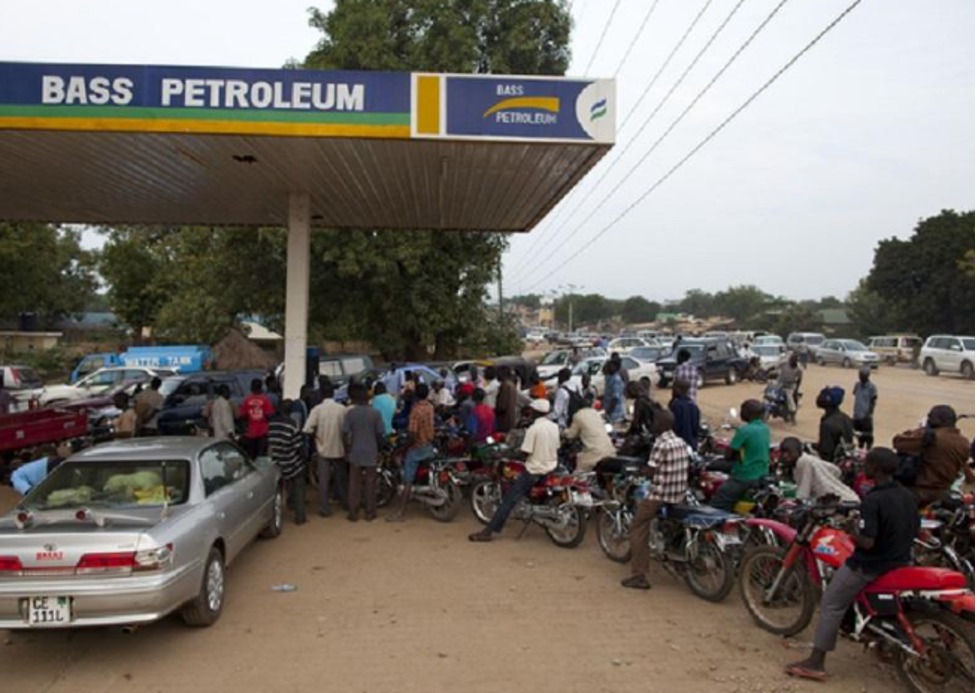
South Sudan’s Ministerial High-Level Committee on Economic Reform has recommended further reductions in fuel prices to help stabilize the economy and ease pressure on consumers.
The latest fuel price was about SSP 18,500 per litre in Juba, how of recent there was reduction to 14000 South Sudanese Pounds.
The committee called on business community dealing in fuel to further reduce the price to make it affordable to the public.
The recommendation was made during the Committee’s 15th regular meeting this week at the Ministry of Finance and Planning, chaired by. Pieng Deng Kuol.
Committee Rapporteur James Mawich said members reviewed fuel prices and proposed measures to create a balance between the government, fuel traders and consumers.
He said lower fuel prices could reduce transportation costs and help bring down the prices of goods and services.
The Committee also summoned managers of Zain, MTN and Digitel to discuss the government’s directive requiring telecom companies to pay taxes in cash.
Mawich said the cash tax policy is aimed at strengthening government revenue collection and ensuring funds are available for salaries and government programmes.
The Committee is expected to continue reviewing key economic challenges and recommending measures to improve revenue collection and market stability.
South Sudan has faced recurring fuel shortages and sharp price increases, putting pressure on transport operators, businesses and households.
The country relies heavily on imported refined petroleum products, while supply disruptions, currency depreciation and high transport costs have contributed to rising pump prices.
In July 2026, petrol in Juba reached about SSP 18,500 per litre, up from around SSP 14,500, while prices in some areas exceeded SSP 20,000.
The increase pushed up transport fares and the prices of food and other essential goods. The government has since sought to increase fuel supplies and reduce prices as part of wider economic reforms.