
South Sudan’s government has dismissed speculation of a possible coup, saying President Salva Kiir remains firmly in control and urging the public to reject what it described as propaganda and unverified reports.
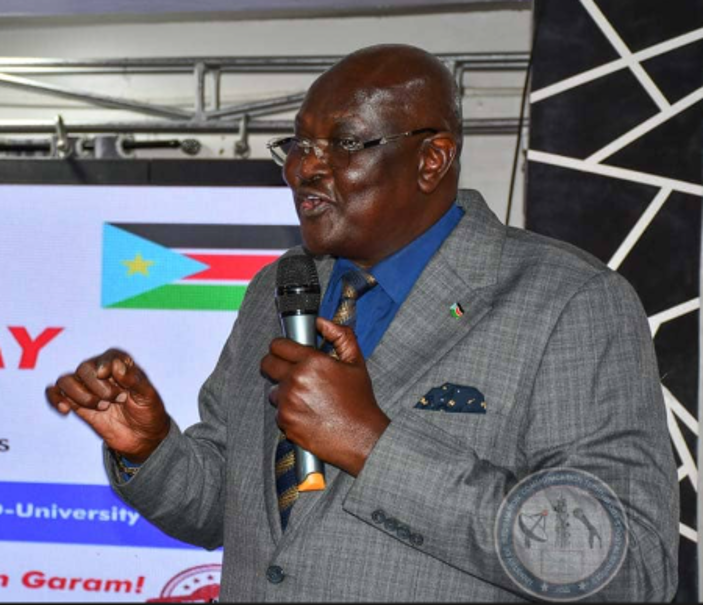
Information minister and government spokesperson Ateny Wek Ateny told journalists in Juba that there was no coup under way and questioned why an alleged takeover was being openly discussed.
“The non-existence of a coup is why it is being discussed, because if there is no coup people discuss it, but if there is a coup, they will not discuss it,” Ateny said.
He said he did not believe anyone in South Sudan was capable of staging a military takeover, arguing that the country had not reached a point where coups could succeed.
“I do not think there is anybody capable of making a coup in this country,” Ateny said. “We are yet to get into the level where coups are done.”
Ateny also rejected suggestions that President Kiir could be removed from power, saying the president continues to have the backing of former members of the Sudan People’s Liberation Army (SPLA).
“President Kiir, for that matter among his colleagues, the former SPLA soldiers, there is nobody who wants to see somebody who is not President Kiir as president of the country for now,” he said.
“So how can a coup be possible?”
The minister did not provide details of any alleged coup plot or identify the source of the speculation. He instead called on the public to avoid spreading information that has not been verified.
The comments come as South Sudan faces continuing political and security challenges, with renewed violence in parts of the country and uncertainty surrounding the implementation of the 2018 peace agreement.
The peace deal brought Kiir and his former rival, Riek Machar, into a power-sharing government after years of civil war. But implementation has been repeatedly delayed, while political tensions between the two camps have continued.
Machar, who is the country’s suspended first vice-president, remains detained in Juba and is facing legal proceedings. His detention has added to concerns over the future of the peace agreement and the country’s political transition.
South Sudan is also preparing for elections scheduled for December 2026, although outstanding political and security issues continue to pose challenges.
The country has endured repeated periods of political instability since gaining independence from Sudan in 2011. The civil war that began in 2013 between forces loyal to Kiir and Machar killed and displaced large numbers of people before the two sides signed the 2018 peace agreement.
More recently, fighting has continued in parts of the country, including Jonglei state, where government forces and opposition-linked fighters have clashed.
Against that backdrop, reports of possible political instability can quickly fuel anxiety among the public, particularly when circulated through social media and other informal channels.
Ateny sought to reassure the public that the government remains in control.
“There is nothing like a coup,” he said, describing the reports as mere speculation.
The minister’s comments represent the government’s position. No independent evidence of an attempted coup was presented at the briefing.
The government has urged citizens to remain calm and avoid spreading unverified information as the country navigates its political transition and prepares for the planned elections.