


South Sudan’s parliamentary Petroleum Committee has pledged to work with the National Oil Companies Union (NOCU) to remove barriers limiting the participation of locally owned businesses in the country’s petroleum industry.
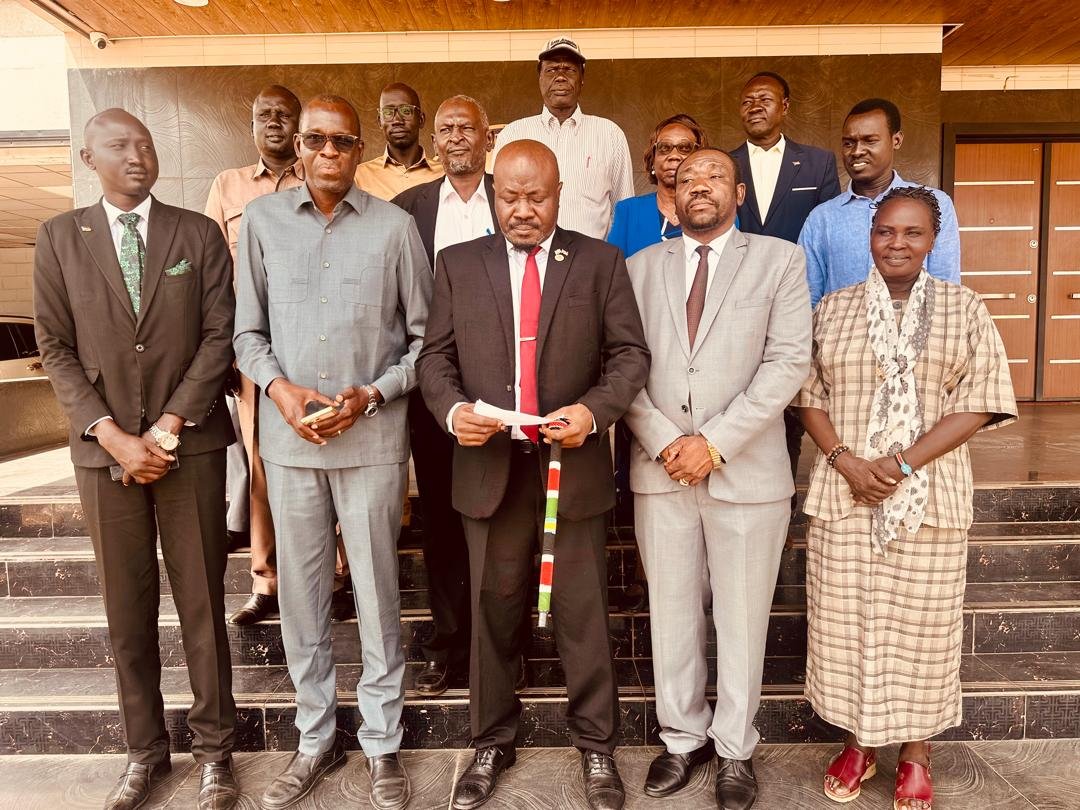
The commitment followed a meeting between the Standing Specialized Committee on Petroleum of the Revitalized Transitional National Legislative Assembly (R-TNLA) and the leadership of NOCU, led by its Secretary General, Eng. Dr. Mayik Korium, in Juba.
The engagement focused on strengthening the legal and institutional position of South Sudanese-owned oil companies and creating greater opportunities for them to compete in the petroleum sector.
NOCU, which was registered in 2025, told the committee that locally owned companies continue to face several challenges that limit their ability to participate meaningfully in the industry.
These include what the union described as institutional imbalances in the awarding of contracts, limited access to financing from commercial banks and restricted employment opportunities for South Sudanese professionals.
South Sudan’s petroleum sector remains one of the country’s most important sources of government revenue, but concerns have continued over the extent to which South Sudanese businesses and professionals benefit from activities across the oil value chain.
NOCU used the meeting to brief the new Petroleum Committee leadership on its mandate and seek legislative, legal and institutional support to strengthen the position of national oil companies.
The union argued that locally owned companies require a more enabling business environment to compete with foreign firms operating in the petroleum industry.
One of the major concerns raised was access to commercial financing, according to NOCU, South Sudanese companies often face difficulties securing loans from commercial banks, limiting their ability to invest in equipment, expand operations and compete for contracts.
However, the chairperson of the Standing Specialized Committee on Petroleum, Hon. Boutros Monani Magaya, said Parliament recognizes the importance of ensuring that the country’s petroleum resources generate meaningful opportunities for South Sudanese companies and professionals.
“Our petroleum sector must create meaningful opportunities for South Sudanese companies and professionals. The Committee is committed to working with industry stakeholders to address barriers to local participation and strengthen the contribution of our national enterprises,” Magaya said.
The committee and NOCU agreed to focus on developing measures that could improve local participation, including legal recognition of the union and the establishment of an appropriate legal framework to support its work.
The awarding of contracts was among the issues highlighted during the engagement.
Local companies want greater opportunities to compete for contracts linked to exploration, production, logistics, engineering, construction, consultancy and other activities across the petroleum value chain.
Strengthening local participation could potentially allow more petroleum-related spending to remain within South Sudan while creating opportunities for domestic businesses to grow.
It could also contribute to the development of local technical expertise and reduce dependence on external companies for services that South Sudanese enterprises could eventually provide.
NOCU highlighted constraints affecting employment opportunities for South Sudanese in the petroleum industry, particularly in technical and professional positions.
Greater participation by national companies could create additional opportunities for South Sudanese engineers, geologists, technicians, accountants, lawyers and other professionals.
However, this would require continued investment in skills development, professional training and access to practical experience within the industry.
As part of efforts to strengthen the institutional framework for local oil companies, the Petroleum Committee and NOCU agreed to explore a benchmarking study tour to a country with an established national oil companies union.
The proposed visit would allow South Sudanese lawmakers and industry representatives to examine how other countries regulate and support locally owned petroleum companies.
The delegation would study issues including legal recognition, institutional structures, membership arrangements, financing mechanisms and policies designed to increase domestic participation.
Recommendations from the proposed study tour would subsequently be presented to the Petroleum Committee for consideration.
The engagement also placed local content at the centre of discussions about the future of South Sudan’s petroleum industry.
A stronger local-content framework could encourage petroleum companies to source more goods and services locally, employ South Sudanese workers and build partnerships with domestic businesses.
However, local companies would also need to demonstrate the technical, financial and operational capacity required to meet industry standards.
This means government policy would need to be accompanied by efforts to strengthen local businesses through access to finance, training, technology and partnerships.
Access to capital could prove critical to the success of local participation.
Oil-sector contracts often require companies to have significant financial resources before they can begin operations. Limited access to affordable commercial loans can therefore place locally owned companies at a disadvantage when competing with larger international firms.
NOCU’s concerns over financing highlight the need for a broader conversation involving the government, commercial banks, petroleum companies and regulators.
Developing financial mechanisms tailored to legitimate South Sudanese enterprises could help domestic companies acquire equipment, employ skilled workers and expand their operations.
The Petroleum Committee and NOCU also agreed to maintain regular consultations on issues affecting South Sudanese participation in the petroleum industry.
The planned engagement will cover local content, contract opportunities, access to finance, employment and broader participation of South Sudanese enterprises.
Such regular dialogue could allow emerging challenges to be identified earlier and provide a channel through which local companies can raise concerns with policymakers.
The meeting comes at a time when South Sudan continues to seek ways of strengthening its economy and maximizing the benefits derived from its petroleum resources.
While oil remains central to government revenues, increasing domestic participation could help ensure that the sector contributes more broadly to the development of South Sudan’s private sector.
A stronger network of locally owned petroleum companies could generate employment, develop technical expertise and create businesses capable of participating in the industry over the long term.
For Parliament, the challenge will now be translating the commitments made during the meeting into concrete legislation and policy measures.
For NOCU and its members, the challenge will be demonstrating that South Sudanese companies can meet industry standards and compete effectively when given greater opportunities.
The emerging partnership between the Petroleum Committee and NOCU could therefore become an important platform for reshaping the country’s petroleum industry around greater local ownership, stronger domestic businesses and increased opportunities for South Sudanese professionals.
Ultimately, the debate is not simply about who receives petroleum contracts. It is about whether South Sudan’s oil wealth can generate sustainable opportunities for the country’s own businesses and citizens while building the capacity needed for a more self-reliant petroleum industry.


