
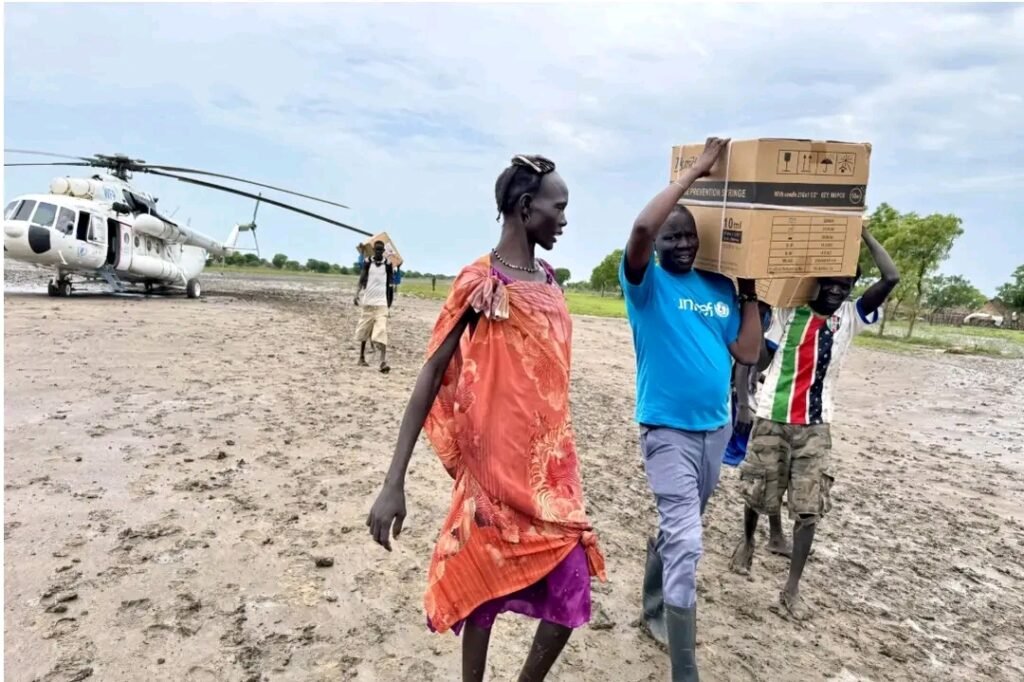
South Sudanese humanitarian workers account for the majority of the 36 aid personnel killed in South Sudan so far this year, according to the United Kingdom, highlighting the disproportionate risks faced by local aid workers.
The figure was released by the UK as it marked World Humanitarian Day and paid tribute to humanitarian personnel working to provide essential assistance across South Sudan.
The UK said humanitarian workers continue to face attacks, threats, harassment, abductions and killings while delivering assistance to vulnerable communities.
The deaths have raised concerns over the safety of South Sudanese nationals working for humanitarian organizations, many of whom operate in communities directly affected by conflict and displacement.
Local humanitarian workers often have to travel to remote and insecure areas to deliver food, healthcare, clean water, protection services and other forms of assistance.
Unlike international personnel who may be deployed for limited periods, South Sudanese aid workers frequently live and work within the communities they serve.
The UK said the risks faced by humanitarian personnel have become increasingly concerning as humanitarian needs continue to grow across the country.
“Humanitarian workers are Not a Target,” the UK said, urging all parties to protect aid personnel.
The United Kingdom called on South Sudan’s Transitional Government and all parties to take measures to protect humanitarian workers and ensure that humanitarian organizations can operate safely.
It also called for respect for international humanitarian principles and safe, timely and unimpeded access for humanitarian assistance.
South Sudan continues to experience a combination of conflict, displacement, food insecurity, flooding and disease outbreaks, increasing the need for humanitarian assistance.
For local aid workers, the risks can be particularly acute because their work often takes them into areas where insecurity and limited infrastructure make access difficult.
The UK said it remains committed to supporting humanitarian operations in South Sudan, but warned that funding alone cannot guarantee humanitarian access when aid workers remain exposed to violence.
The deaths have placed renewed attention on the protection of South Sudanese humanitarian workers, who remain a critical part of the country’s humanitarian response.