
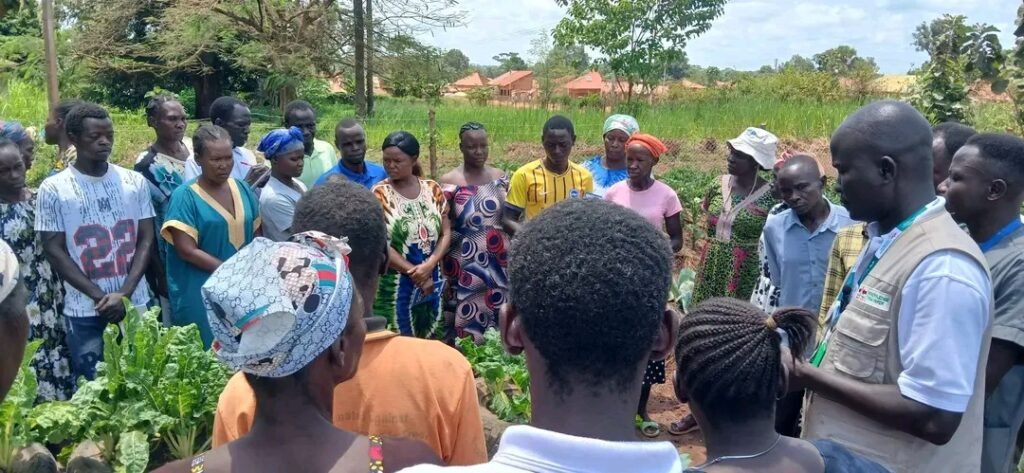
A World Bank-funded agricultural livelihoods project has delivered a new multi-purpose community centre to residents of Kwanga Boma in Maridi County, with government and development partners calling on local communities to protect and sustain the facility.
The facility was handed over by the Food and Agriculture Organization of the United Nations (FAO) under the Resilience Agricultural Livelihood Project (RALP), a government-led initiative financed by the World Bank and implemented by FAO.
The investment is intended to strengthen community resilience, support agricultural livelihoods and contribute to improved food security in rural communities.
Speaking at the handover ceremony, Western Equatoria State Minister of Agriculture, Hon. Nagomoro Bridget Phillimon, who represented the state government, welcomed the project and commended the World Bank for investing in community development.
She said the centre should not be viewed simply as a physical structure but as a long-term investment in agriculture, food security and the economic future of the community.
“This facility is more than just a building; it is an investment in agriculture, food security and the future of our people.” Hon. Nagomoro Bridget Phillimon.
The minister urged residents to take ownership of the facility by using it responsibly, protecting its infrastructure and ensuring proper maintenance.
She warned that the benefits of development projects could be lost if communities failed to safeguard them.
The call for community ownership was echoed by FAO and local authorities, who emphasized that the sustainability of the centre would depend largely on how it is managed after the handover.
FAO’s Western Equatoria representative, Abubakar Rajab, encouraged community members and stallholders using the facility to maintain it properly and work together to ensure it continues serving residents for years to come.
The handover therefore shifts a significant responsibility to the local community to protect the investment and ensure that the centre remains functional.
State Minister of Cooperative and Rural Development, Hon. Yoana Robert, similarly called on residents to safeguard the facility for future generations.
He also urged FAO and its development partners to consider establishing similar infrastructure in other counties across Western Equatoria State.
The project forms part of wider efforts to strengthen agricultural livelihoods and resilience among rural communities facing economic and food-security challenges.
Through RALP, the World Bank provides funding while FAO implements activities designed to support agricultural production, community resilience and livelihoods.
The new facility adds community infrastructure to those efforts, providing a platform that can support local economic and agricultural activities.
For communities in rural Western Equatoria, such investments are particularly significant as agriculture remains a major source of livelihoods and household food.
Maridi County Commissioner Hon. Daniel Saleh Balash pledged government support to protect the facility and ensure it remains available to the community.
He said county authorities would work through security organs to safeguard the investment.
The commitment comes as government and development partners increasingly emphasize the need to protect public and community infrastructure from neglect, misuse and damage.
The handover has also renewed calls for similar development investments in other parts of Western Equatoria.
Minister Yoana Robert’s appeal reflects the wider demand for infrastructure that can strengthen rural economies and support communities outside major urban centres.
For state authorities, expanding such investments could help address infrastructure gaps while strengthening agricultural production and improving communities’ capacity to withstand economic and livelihood shocks.
The Kwanga facility is consequently being presented not only as a completed construction project but as a test of whether development investments can be sustained through strong community ownership and responsible management.
As the World Bank-funded RALP continues, government officials and FAO are urging residents to ensure that the new centre remains a functioning community asset rather than becoming another underused or deteriorating public facility.
The handover marks another step in efforts to strengthen rural development in Western Equatoria, but its long-term impact will ultimately depend on the community’s ability to protect, manage and use the investment effectively.