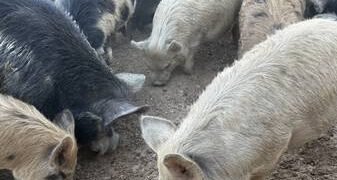



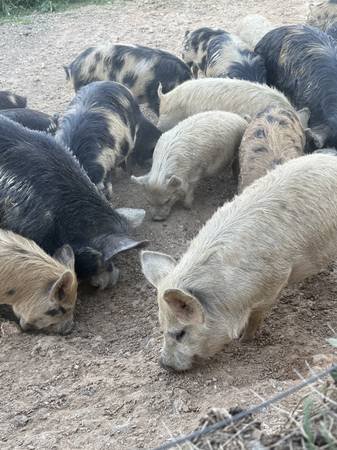
What began as unexplained deaths among pigs in farming communities in Western Equatoria has developed into a serious livelihood concern, highlighting the vulnerability of South Sudanese farmers to livestock disease and the limited veterinary resources available to respond to outbreaks.
State authorities have deployed veterinary personnel to affected areas in Yambio and Nzara counties after hundreds of pigs died from an unidentified disease. Preliminary field observations have raised suspicion of African swine fever, although authorities have stressed that the disease must be confirmed through laboratory testing.
The outbreak is particularly concerning for smallholder farmers who depend on pig farming as a source of income, household food and a means of paying for essential needs such as school fees and healthcare.
State Minister of Animal Resources, Fisheries and Tourism Samuel Simon Zigizo said the government is investigating the deaths while working with national authorities and development partners.
“We are fully aware that there is a strong wave of an unknown disease, but it looks like African swine fever according to the symptoms we are receiving from the ground,” Zigizo said.
The minister urged farmers to separate sick animals from healthy ones, saying the immediate response is complicated by the absence of vaccines and treatment for the suspected disease.
“We do not have vaccines and we do not have treatment,” he said, urging communities to isolate unhealthy animals to reduce the risk of further transmission.
For farmers, however, the outbreak is not simply an animal-health emergency—it is an economic crisis.
One affected farmer, Bafuka John, says he has lost 36 pigs since the disease began spreading, wiping out a significant part of his livestock investment.
His losses reflect the wider vulnerability of rural households whose livelihoods depend on livestock but who often have limited access to insurance, veterinary services or alternative sources of income when animals die.
The situation also threatens local markets. If large numbers of pigs are lost, farmers could face reduced household income and diminished ability to restock their herds, while communities could experience disruptions in local livestock trade.
The uncertainty surrounding the disease is adding to farmers’ anxiety because they cannot determine which animals are infected or what measures will guarantee the survival of healthy pigs.
Although African swine fever is suspected, it is important to distinguish between field suspicion and laboratory confirmation.
Recent reporting from Yambio has also documented suspected swine fever deaths among pigs, with veterinary authorities collecting samples for testing. Radio Tamazuj reported that officials were awaiting laboratory confirmation while warning farmers to quarantine sick pigs.
African swine fever is a highly contagious viral disease affecting domestic and wild pigs. The Food and Agriculture Organization describes it as one of the most serious threats to pig production, livelihoods and food security. It does not infect humans, but outbreaks can cause severe economic losses among pig farmers.
That distinction is important for communities: the immediate concern is protecting livestock and livelihoods while avoiding misinformation until diagnostic results are available.
The Yambio outbreak is occurring against a broader backdrop of weak livestock-health systems in South Sudan.
Livestock is central to the country’s rural economy and food security, with FAO estimating that more than 65 percent of the population relies on livestock to some degree.
Yet veterinary services remain difficult to access in many remote communities.
In cattle camps and pastoral areas, livestock keepers can travel long distances before reaching trained veterinary personnel. Poor roads, insecurity, shortages of medicines and limited diagnostic capacity can make it difficult to identify diseases quickly and prevent them from spreading.
FAO-supported programmes have previously relied on community-based animal-health workers to bring basic veterinary services closer to livestock-keeping communities. Such programmes have been associated with reductions in disease outbreaks and animal mortality.
The current crisis also echoes previous incidents in South Sudan in which livestock keepers have reported sudden or unexplained deaths among cattle and other animals.
In one recent reported incident, 53 cattle died from an unknown disease in Unity State, according to reports circulating in August 2026.
South Sudan has also experienced large-scale livestock losses from environmental disasters. FAO reported that the devastating 2021 floods affected an estimated 10.1 million animals and resulted in about 795,000 animal deaths.
These incidents demonstrate that livestock emergencies in South Sudan can arise from different causes—including infectious diseases, flooding, poor access to veterinary care and other environmental pressures—and therefore require strong surveillance rather than assumptions about the cause.
The challenge is especially serious in cattle camps, where large concentrations of animals can create conditions in which disease spreads rapidly if surveillance, vaccination and animal-health services are inadequate.
For pastoralist communities, the loss of cattle can be even more devastating than the loss of individual household assets. Livestock often represents wealth, food, social status and a family’s ability to cope with emergencies.
When disease strikes and veterinary teams cannot reach affected communities quickly, farmers and herders may be forced to rely on traditional remedies or simply watch their animals die.
The problem is compounded by the country’s limited livestock data. The South Sudan Livestock Information Management System notes that the livestock sector remains poorly understood partly because of insufficient reliable data, which undermines planning, investment and coordination.
The unfolding situation in Western Equatoria therefore raises a larger question about South Sudan’s preparedness to detect and respond to livestock diseases.
Experts and authorities increasingly emphasize the importance of early detection, laboratory diagnosis, vaccination where appropriate, quarantine, movement control and community-based disease reporting.
For pig farmers, early intervention could mean the difference between losing a few animals and losing entire herds.
The authorities’ deployment of veterinary officers is therefore an important first step, but farmers and livestock stakeholders say the response will require sustained support.
Government agencies, FAO and other development partners could play a role in strengthening veterinary laboratories, supplying protective equipment and medicines where appropriate, training animal-health workers and improving disease surveillance in remote areas.
For Western Equatoria, where agriculture and livestock remain central to rural livelihoods, the pig deaths are a warning that animal health cannot be treated as a secondary issue.
Every animal lost represents an economic loss for a household. For a farmer such as Bafuka John, the loss of 36 pigs can mean the disappearance of months or years of investment.
The crisis also demonstrates the connection between animal health and food security. FAO identifies African swine fever as a major threat to pig production, livelihoods and food security globally.
As veterinary investigations continue in Yambio and Nzara, farmers are waiting for answers—and, more importantly, assistance to prevent further losses.
Until the cause is scientifically established, authorities are urging farmers to treat the disease as a serious biosecurity threat, isolate sick animals and report unusual deaths immediately.
For South Sudan’s livestock-dependent communities, the message from Yambio is clear: protecting animals is not only about protecting livestock—it is about protecting incomes, food, families and the economic resilience of rural communities.


